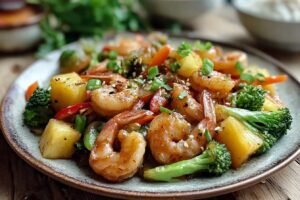

Why You’ll Love This Vegetable Casserole
This vegetable casserole is a simple yet satisfying dish that fits perfectly into busy schedules, offering a quick way to get nutritious meals on the table. It’s full of fresh flavors from everyday ingredients, making it a hit for families looking for something comforting and healthy. Whether you’re cooking for kids or need a meal that pleases everyone, this recipe stands out for its ease and appeal.
One key reason to try this vegetable casserole is its ease of preparation. This recipe is designed for simplicity and quick preparation, making it perfect for busy weeknights. With straightforward steps and a short cooking time, anyone can create a delicious meal without hassle.
Another benefit is the health advantages it provides. Packed with fresh vegetables and wholesome ingredients, this casserole offers numerous nutritional perks. It is rich in vitamins, fiber, and antioxidants, promoting overall wellness and supporting a balanced diet.
The versatility of this dish adds to its charm as well. Adaptable to various dietary needs, this vegetable casserole can be easily modified for vegan, gluten-free, or low-calorie preferences, ensuring everyone can enjoy it according to their requirements.
What makes this casserole truly special is its distinctive flavor. Combining fresh herbs, seasoning blends, and a blend of textures, this dish transforms everyday vegetables into a delightful meal you won’t forget.
Jump to:
- Why You’ll Love This Vegetable Casserole
- Essential Ingredients for Vegetable Casserole
- How to Prepare the Perfect Vegetable Casserole: Step-by-Step Guide
- Dietary Substitutions to Customize Your Vegetable Casserole
- Mastering Vegetable Casserole: Advanced Tips and Variations
- Pro Cooking Techniques
- Flavor Variations
- Presentation Tips
- Make-Ahead Options
- How to Store Vegetable Casserole: Best Practices
- FAQs: Frequently Asked Questions About Vegetable Casserole
- Can I prepare a vegetable casserole ahead of time and refrigerate it before baking?
- What vegetables work best in a vegetable casserole?
- How can I make my vegetable casserole creamy without using heavy cream?
- Is it possible to make a vegetable casserole gluten-free?
- How long does a vegetable casserole typically keep in the refrigerator and freezer?
- Vegetable Casserole
- Ingredients
- Instructions
- Last Step:
- Notes
- Nutrition
- Did you make this recipe?
Essential Ingredients for Vegetable Casserole
Gathering the right ingredients is the first step to making a great vegetable casserole, and this recipe keeps things straightforward with easy-to-find items. You’ll need a mix of frozen vegetables, cheese, and a few pantry staples to create a balanced and tasty dish. Let’s break down what goes into it, focusing on precise measurements to help you measure accurately.
- 450 grams (16 ounces) frozen broccoli
- 450 grams (16 ounces) frozen carrots
- 450 grams (16 ounces) frozen cauliflower
- 450 grams (16 ounces) sliced processed cheese
- 1 roll of crushed crackers
- 60 milliliters (1/4 cup) melted butter
These ingredients make up about 1.35 kilograms (48 ounces or 9 cups) of frozen vegetables, which you can swap for fresh ones if you prefer. Just blanch fresh vegetables in boiling water until tender, then drain and dry them before using.
How to Prepare the Perfect Vegetable Casserole: Step-by-Step Guide
Getting started with this vegetable casserole is simple, and following these steps will lead to a warm, flavorful result. Begin by preheating your oven and preparing the vegetables to ensure everything cooks evenly. This guide walks you through each part to make the process smooth and fun.
First, preheat the oven to 175°C (350°F) and get your ingredients ready. In a large microwave-safe bowl, combine the broccoli, carrots, and cauliflower, stirring well.
Next, microwave the mixture uncovered on high for 12 to 15 minutes until the vegetables are warmed through. Then, transfer the vegetables to a 23 cm by 33 cm (9-inch by 13-inch) baking dish.
Evenly layer the sliced cheese over the vegetables. In a medium bowl, mix the crushed crackers with the melted butter.
Sprinkle the cracker mixture evenly over the cheese layer. Finally, bake for 30 to 45 minutes, or until the cheese melts and the topping turns golden brown.
The total preparation time is about 1 hour, with 15 minutes for prep and 45 minutes for cooking. This recipe yields around 12 servings of 1 cup each, making it great for family meals. For more ideas on baked dishes, check out our apple crisp recipe that offers similar comforting vibes.

Dietary Substitutions to Customize Your Vegetable Casserole
Making this vegetable casserole your own is easy with a few tweaks to fit different diets. You can swap ingredients without losing the dish’s core appeal, so it works for various needs. Let’s look at some options to make it just right for you.
For protein and main component alternatives, consider substituting shredded chicken with tofu or tempeh for vegan options. You can also use cooked lentils or chickpeas to boost plant-based protein content.
When it comes to vegetables, sauce, and seasoning changes, swap broccoli for cauliflower or asparagus based on what’s fresh. Replace traditional cheese with nutritional yeast or vegan cheese substitutes.
Experiment with sauces such as tomato-based marinara or dairy-free cream sauces for added variety. Adjust seasonings to include fresh herbs like thyme or rosemary, or spices such as smoked paprika for a new taste.
Mastering Vegetable Casserole: Advanced Tips and Variations
Once you have the basics down, you can elevate your vegetable casserole with some expert tricks. Try a few changes to add depth and make the dish even more exciting for your table. Roasting vegetables before assembling can deepen their flavor and improve texture.
Pro Cooking Techniques
Roast vegetables before putting them together to bring out richer tastes, and mix different cheeses for a more layered flavor. This helps create a casserole that’s not just good, but memorable for family dinners.
Flavor Variations
Introduce spices like curry powder or cumin for an exotic twist, or add sun-dried tomatoes and olives for a Mediterranean feel. These small changes can make the casserole feel fresh each time you make it.
Presentation Tips
Garnish with fresh chopped parsley or chives, and serve in individual ramekins for a nicer look. For more dessert ideas that pair well, explore our blueberry pie which shows how simple tweaks can enhance baked goods.
Make-Ahead Options
Prepare the casserole ahead and store it covered in the refrigerator, then bake when needed. This saves time and keeps things tasty for busy days.
How to Store Vegetable Casserole: Best Practices
Keeping your vegetable casserole fresh is key to enjoying leftovers, and proper storage helps maintain its quality. Follow these tips to make sure it lasts without losing flavor. Think about how you’ll use it later when planning your meals.
Store leftovers in airtight containers in the refrigerator for up to 3-4 days to keep them fresh. For long-term options, cool the casserole completely, then freeze in sealed containers for up to 2 months.
When reheating, warm leftovers in a preheated oven at 350°F (175°C) for 15-20 minutes until hot. Prepare in batches using portion-sized containers to make meal prep easier and control servings.
The processed cheese in this recipe can be swapped with cheddar, Parmesan, feta, or ricotta, and crackers can be replaced with gluten-free options or chopped nuts. Leftovers keep well refrigerated for up to four days, just like the additional tips mention.
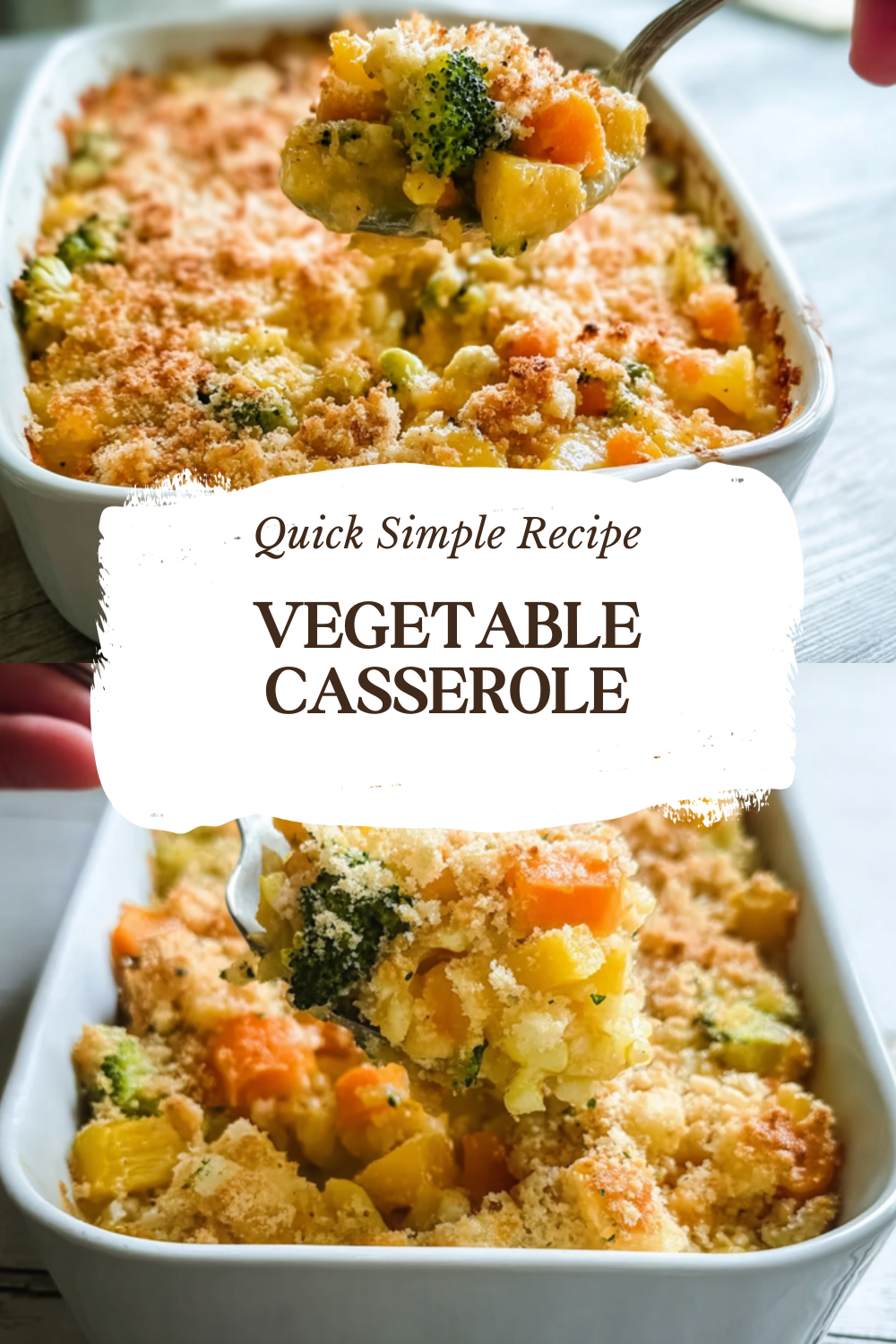
FAQs: Frequently Asked Questions About Vegetable Casserole
Can I prepare a vegetable casserole ahead of time and refrigerate it before baking?
Yes, you can assemble your vegetable casserole up to 24 hours in advance. After layering the vegetables, cheese, and topping, cover the dish tightly with plastic wrap or foil and refrigerate. When ready to bake, remove the cover and bake at 350°F (175°C) for 35 to 45 minutes until bubbly and golden. Adding 5-10 extra minutes to the baking time helps ensure it’s heated through. This method is convenient for meal planning and gatherings.
What vegetables work best in a vegetable casserole?
Common vegetables for casseroles include broccoli, cauliflower, carrots, green beans, and corn. Frozen mixed vegetables are also a time-saving option. It’s best to use vegetables that hold their shape when baked and don’t release too much water, to avoid a soggy casserole. Lightly steaming or microwaving frozen vegetables before assembling helps maintain texture and flavor.
How can I make my vegetable casserole creamy without using heavy cream?
To create a creamy texture without heavy cream, you can use alternatives such as cream cheese, sour cream, Greek yogurt, or a béchamel sauce made with milk and flour. Adding a can of cream of mushroom or cream of celery soup is another popular choice. These options provide rich flavor and moisture while keeping the casserole balanced.
Is it possible to make a vegetable casserole gluten-free?
Yes, a vegetable casserole can be made gluten-free by swapping out ingredients like breadcrumbs or crackers with gluten-free alternatives. Many stores offer gluten-free crackers or bread crumbs made from rice or corn. Alternatively, topping the casserole with crushed nuts or gluten-free oats provides a crunchy texture without gluten.
How long does a vegetable casserole typically keep in the refrigerator and freezer?
A cooked vegetable casserole can be stored in the refrigerator for 3 to 4 days in an airtight container. For longer storage, freeze the casserole for up to 2 to 3 months. Thaw it overnight in the refrigerator before reheating in the oven at 350°F (175°C) until warmed through. Proper storage helps maintain freshness and flavor.
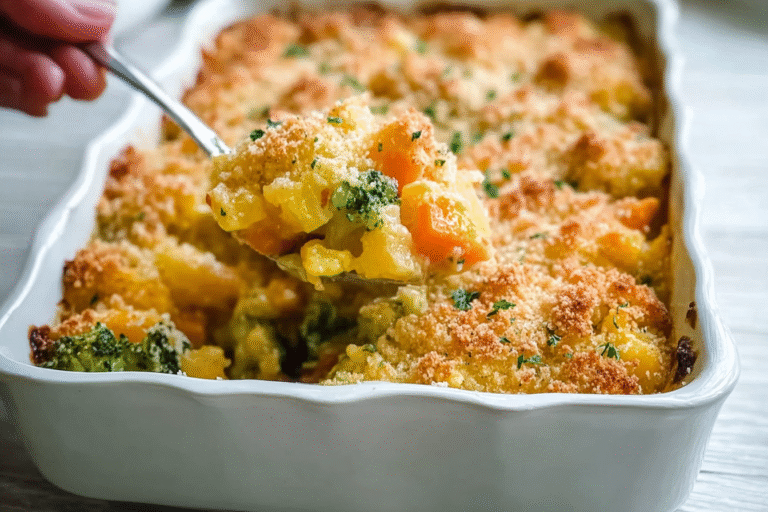
Vegetable Casserole
🥦 This vegetable casserole offers a nutritious and delicious way to enjoy a medley of vegetables with a creamy cheese topping.
🧀 It’s easy to prepare and perfect for family meals that are both comforting and flavorful.
- Total Time: 1 hour
- Yield: 12 servings
Ingredients
– 450 grams (16 ounces) frozen broccoli
– 450 grams (16 ounces) frozen carrots
– 450 grams (16 ounces) frozen cauliflower
– 450 grams (16 ounces) sliced processed cheese
– 1 roll crushed crackers
– 60 milliliters (1/4 cup) melted butter
Instructions
1-First: preheat the oven to 175°C (350°F) and get your ingredients ready. In a large microwave-safe bowl, combine the broccoli, carrots, and cauliflower, stirring well.
2-Next: microwave the mixture uncovered on high for 12 to 15 minutes until the vegetables are warmed through. Then, transfer the vegetables to a 23 cm by 33 cm (9-inch by 13-inch) baking dish.
3-Evenly layer the sliced cheese over the vegetables. In a medium bowl, mix the crushed crackers with the melted butter.
4-Sprinkle the cracker mixture evenly over the cheese layer. Finally, bake for 30 to 45 minutes, or until the cheese melts and the topping turns golden brown.
Last Step:
Please leave a rating and comment letting us know how you liked this recipe! This helps our business to thrive and continue providing free, high-quality recipes for you.Notes
🥕 Frozen vegetables can be substituted with fresh ones by blanching them in boiling water until tender, then draining and drying.
🧀 You can replace processed cheese with homemade cheese sauce or cheeses such as cheddar, Parmesan, feta, or ricotta.
🍪 For topping variations, use alternative crackers, gluten-free breadcrumbs, or chopped nuts instead of crackers.
- Prep Time: 15 minutes
- Cook Time: 45 minutes
- Category: Side Dish
- Method: Baking
- Cuisine: American
- Diet: Vegetarian
Nutrition
- Serving Size: 1 cup
- Calories: 178
- Sugar: 5 g
- Sodium: 967 mg
- Fat: 12 g
- Saturated Fat: 5 g
- Carbohydrates: 7 g
- Protein: 11 g
- Cholesterol: 24 mg