
Why You’ll Love This Chinese Rice Noodle Soup With Shrimp
This Chinese Rice Noodle Soup With Shrimp is the kind of meal that feels comforting from the first spoonful. It comes together in just 35 minutes, which makes it a smart pick for busy weeknights, chilly afternoons, or any time you want something warm without a lot of fuss. If you like fast dinners with big flavor, this rice noodle soup is going to earn a regular spot in your kitchen.
- Easy to make: The whole dish cooks in one Dutch oven, and the steps are simple enough for beginners. You do a little chopping, a short sauté, then let the broth, noodles, shrimp, and vegetables finish the job.
- Good for you: With shrimp, bok choy, carrot, ginger, and broth, this shrimp noodle soup brings protein, vitamins, and satisfying flavor in one bowl. It is also light enough to fit into many balanced meal plans.
- Flexible for different diets: This Chinese noodle soup is naturally gluten-free when made with rice noodles and gluten-free soy sauce or tamari. You can also swap the shrimp for chicken or add extra vegetables.
- Bright, cozy flavor: Sesame oil, ginger, garlic, fish sauce, and rice vinegar give the broth a savory, fresh taste that feels soothing and full of character.
This is the kind of soup that tastes like you spent all afternoon cooking, even though it is ready fast enough for a weeknight.
If you enjoy simple comfort food that still feels special, this Chinese Rice Noodle Soup With Shrimp checks every box. It is quick, nourishing, and easy to adjust for your family’s needs.
For readers who like light meals with satisfying flavor, you may also enjoy our frozen coconut limeade for a refreshing drink alongside dinner.
Jump to:
- Why You’ll Love This Chinese Rice Noodle Soup With Shrimp
- Essential Ingredients for Chinese Rice Noodle Soup With Shrimp
- Main Ingredients
- Special Dietary Options
- How to Prepare the Perfect Chinese Rice Noodle Soup With Shrimp: Step-by-Step Guide
- First Step: Get everything ready before you turn on the heat
- Second Step: Build the flavor base
- Third Step: Add the broth and seasonings
- Fourth Step: Cook the noodles
- Fifth Step: Add shrimp, greens, and finish the soup
- Serving Notes
- Dietary Substitutions to Customize Your Chinese Rice Noodle Soup With Shrimp
- Protein and Main Component Alternatives
- Vegetable, Sauce, and Seasoning Modifications
- Mastering Chinese Rice Noodle Soup With Shrimp: Advanced Tips and Variations
- Pro Cooking Techniques
- Flavor Variations
- Presentation Tips
- Make-Ahead Options
- How to Store Chinese Rice Noodle Soup With Shrimp: Best Practices
- FAQs: Frequently Asked Questions About Chinese Rice Noodle Soup With Shrimp
- Chinese Rice Noodle Soup With Shrimp
- Ingredients
- Instructions
- Last Step:
- Notes
- Nutrition
- Did you make this recipe?
Essential Ingredients for Chinese Rice Noodle Soup With Shrimp
Every ingredient in this rice noodle soup with shrimp recipe has a job to do. Some build the broth, some add texture, and others bring color and freshness. Here is a clear look at what you need and why each item matters.
Main Ingredients
- 1 tablespoon sesame oil: Adds a rich, nutty base and helps the vegetables start softening in the pot.
- 4 baby bok choy, chopped with white and green pieces separated: The white parts cook longer and create body in the soup, while the green tops stay bright and tender.
- 1 large carrot, peeled and sliced very thin: Brings gentle sweetness and a little crunch.
- 2 cloves garlic, minced or crushed: Adds savory depth and classic Chinese noodle soup flavor.
- 1 tablespoon fresh ginger, minced: Gives the broth a warm, lively kick and pairs well with shrimp.
- 4 cups vegetable or chicken broth: Forms the heart of the soup and gives it a savory base.
- 2 cups water: Lightens the broth so the soup stays balanced.
- 2 tablespoons gluten-free soy sauce or tamari, or regular soy sauce: Adds saltiness and color.
- 2 tablespoons fish sauce: Brings deep umami flavor that makes the broth taste fuller.
- 2 tablespoons rice vinegar: Stirred in at the end for brightness and a little tang.
- 4 ounces pad thai rice noodles, about 1/2 package: Soaks up the broth and gives the soup its classic noodle texture.
- 1 pound small raw shrimp, peeled, 51 to 60 per pound: Cooks quickly and adds lean protein.
- 1 bunch green onions, sliced: Adds fresh flavor and color right before serving.
Special Dietary Options
- Vegan: Swap shrimp for tofu, use vegetable broth, replace fish sauce with a vegan fish sauce substitute or extra tamari, and add mushrooms for more body.
- Gluten-free: Use rice noodles plus gluten-free soy sauce or tamari. Check the fish sauce label if you are very sensitive.
- Low-calorie: Keep the full amount of vegetables, use a light broth, and stick to the listed noodle portion so the bowl stays filling but not heavy.
For more on the nutrition side of shrimp, you can read this helpful shrimp health benefits overview from WebMD. Bok choy is also a great vegetable choice, and you can learn more about it in this bok choy nutrition guide from Healthline.
| Ingredient | Job in the Soup |
|---|---|
| Sesame oil | Builds a nutty, savory base |
| Bok choy | Adds texture, color, and mild greens |
| Ginger and garlic | Create aroma and depth |
| Fish sauce and soy sauce | Give the broth a rich, salty backbone |
| Rice noodles | Make the soup filling and comforting |
| Shrimp | Provides quick-cooking protein |
How to Prepare the Perfect Chinese Rice Noodle Soup With Shrimp: Step-by-Step Guide
First Step: Get everything ready before you turn on the heat
Start by prepping all of your ingredients so the cooking process feels smooth. Chop the baby bok choy and keep the white pieces separate from the green pieces. Peel and slice the carrot very thin, mince the garlic and ginger, slice the green onions, and measure out the broth, water, soy sauce or tamari, fish sauce, rice vinegar, and rice noodles. Because this soup cooks quickly, having everything lined up first makes a big difference.
Rinse and peel the shrimp if needed, then pat them dry with a paper towel. If you are using chicken instead of shrimp, prep the chicken breasts now so they are ready to go into the pot later. Set a Dutch oven or large soup pot on the stove and keep a spoon or spatula nearby.
Second Step: Build the flavor base
Heat 1 tablespoon sesame oil in the Dutch oven over medium-high heat. Once the oil is warm and shimmering, add the white pieces of the chopped baby bok choy and the thin carrot slices. Sauté for about 5 minutes, stirring now and then so the vegetables soften without browning too much. This first layer gives the broth a gentle sweetness and helps the soup taste fuller.
Next, add the minced garlic and minced ginger. Stir them into the vegetables and cook for 1 minute more. You will smell the aroma right away. That short cooking time is enough to wake up the garlic and ginger without burning them.
Third Step: Add the broth and seasonings
Pour in 4 cups broth and 2 cups water. Then stir in 2 tablespoons gluten-free soy sauce or tamari and 2 tablespoons fish sauce. Bring the pot to a boil over medium-high heat. This is where the soup starts to come together, and the broth should look lightly golden and smell savory.
If you are making the chicken variation, this is the point where you would add boneless skinless chicken breasts with the broth. Let them simmer until fully cooked, remove the chicken, shred it, and return it to the pot before adding the noodles. That version works well when you want a different protein but still want the same cozy broth.
Fourth Step: Cook the noodles
Once the broth reaches a boil, add 4 ounces of uncooked pad thai rice noodles, which is about half a package. Cook for about 2 minutes, stirring gently and separating the noodles as they soften. Rice noodles cook fast, so keep an eye on them. You want them tender but not mushy.
If the noodles clump together, use tongs or chopsticks to loosen them. The broth may look a little cloudy at this stage, but that is normal and part of the soup’s comfort-food charm. Try not to overcook the noodles, since they will keep softening in the hot broth.
Fifth Step: Add shrimp, greens, and finish the soup
Stir in 1 pound small raw shrimp, the sliced green onions, and the green pieces of bok choy. Cook for 2 to 3 minutes, just until the shrimp turn pink and opaque. Shrimp cook very quickly, so watch closely. Once they are done, turn off the heat right away.
Finally, stir in 2 tablespoons rice vinegar. This last splash adds brightness and keeps the soup from tasting flat. Taste the broth and adjust if needed, then ladle the soup into bowls and serve immediately while everything is hot and fresh.
Best tip: cook the noodles only until just tender, because they will keep softening in the hot broth.
Serving Notes
This soup is best served right away, while the noodles are silky and the shrimp are tender. A few extra green onions on top make it look nice, and a small squeeze of lime can be tasty if your family likes a little more tang. If you want a mild version, skip chili flakes. If you like heat, add them at the table so everyone can season their own bowl.

Dietary Substitutions to Customize Your Chinese Rice Noodle Soup With Shrimp
Protein and Main Component Alternatives
If shrimp is not your thing, this recipe is easy to change. The simplest swap is boneless skinless chicken breasts, which cook in the broth and shred beautifully. You can also use tofu if you want a vegetarian bowl, or try thinly sliced turkey for a different take on the same cozy soup.
For the noodles, rice noodles are the best fit for a naturally gluten-free bowl, but if you do not have pad thai noodles on hand, look for another thin rice noodle that cooks quickly. Just avoid thick pasta shapes, since they change the texture too much for this style of dish.
Vegetable, Sauce, and Seasoning Modifications
Bok choy and carrot are a classic pair, but you can add mushrooms, baby spinach, or shredded cabbage if that is what you have. Mushrooms bring a deeper flavor, while spinach wilts in fast and adds a softer finish. If you want more color, add snap peas or thin bell pepper slices.
If you do not have fish sauce, oyster sauce can work in some versions, though it changes the flavor a bit. For a milder soup, keep the chili flakes out. If you want more zing, add a little more rice vinegar at the end. This shrimp noodle soup is easy to match to your taste and pantry.
Mastering Chinese Rice Noodle Soup With Shrimp: Advanced Tips and Variations
Pro Cooking Techniques
For the best rice noodle soup, keep the heat steady and avoid overcooking the shrimp. Shrimp only need a few minutes in the hot broth, and pulling the pot off the heat as soon as they turn pink keeps them tender. Another smart move is to slice the carrot very thin so it softens at the same rate as the bok choy stems.
If you want the broth to taste even richer, let the vegetables cook a little longer in the sesame oil before adding liquid. Just do not let them brown too much. A light sauté builds flavor without making the soup heavy.
Flavor Variations
This Chinese noodle soup changes easily depending on what you like. Add mushrooms for more earthy flavor, spinach for extra greens, or a little more ginger if you want a sharper bite. You can also swap fish sauce for oyster sauce if that is what you keep in the pantry. For a more filling dinner, use chicken instead of shrimp and keep the same broth base.
Presentation Tips
For a pretty bowl, make sure each serving gets shrimp, noodles, bok choy, carrot, and a scatter of green onions. A small pinch of sesame seeds can be nice on top, too. Serve the soup in warm bowls if possible, since that helps it stay hot longer at the table.
Make-Ahead Options
If you are planning for a busy day, chop the vegetables ahead of time and store them in the fridge. You can also mix the broth seasonings in a small jar so they are ready when cooking starts. For meal prep, keep the broth separate from the noodles if you can, then add fresh noodles and shrimp when reheating.
How to Store Chinese Rice Noodle Soup With Shrimp: Best Practices
Refrigeration: Let the soup cool a bit, then store it in an airtight container in the fridge for up to 3 days. If possible, keep extra noodles separate so they do not soak up too much broth.
Freezing: Do not freeze the full soup, since the noodles can turn mushy after thawing. A better option is to freeze the broth and vegetables without the noodles and shrimp. When you are ready to eat, thaw the broth, bring it back to a simmer, and add fresh noodles and shrimp.
Reheating: Warm leftovers gently on the stove over medium-low heat or in the microwave in short bursts. Add a splash of water or broth if the soup looks too thick. Cook only until heated through so the shrimp stay tender.
Meal prep considerations: This is a great recipe for partial prep. Chop the vegetables, mix the seasonings, and portion the shrimp ahead of time. Then the final cooking takes very little time, which is helpful for weeknights or lunches.
FAQs: Frequently Asked Questions About Chinese Rice Noodle Soup With Shrimp
Print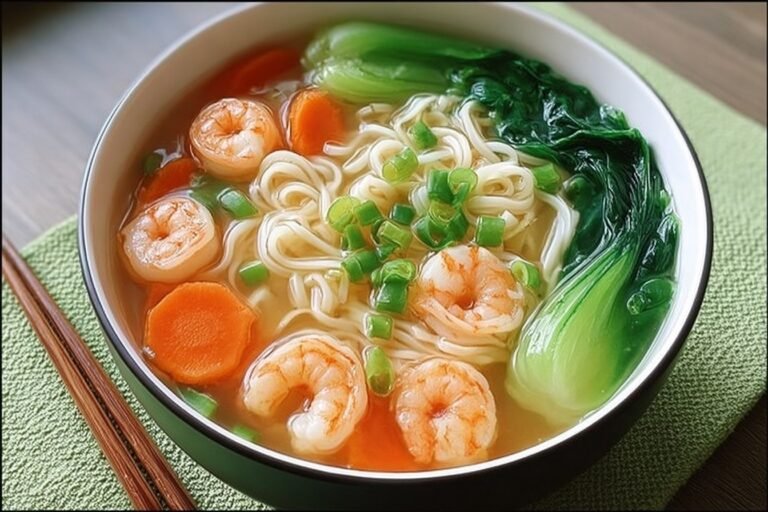
Chinese Rice Noodle Soup With Shrimp
🍜 Warm your soul with tender shrimp, slurpy rice noodles, and crisp veggies in a fragrant broth – a nutrient-dense, soothing soup for comfort and health!
🦐 Ready in 35 minutes, this gluten-free recipe is perfect for quick dinners, sore throats, or light meals packed with vitamins from bok choy and carrots.
- Total Time: 35 minutes
- Yield: 4 servings
Ingredients
– 1 tablespoon sesame oil
– 4 baby bok choy, chopped with white and green pieces separated
– 1 large carrot, peeled and sliced very thin
– 2 cloves garlic, minced or crushed
– 1 tablespoon fresh ginger, minced
– 4 cups vegetable or chicken broth
– 2 cups water
– 2 tablespoons gluten-free soy sauce or tamari, or regular soy sauce
– 2 tablespoons fish sauce
– 2 tablespoons rice vinegar
– 4 ounces pad thai rice noodles, about 1/2 package
– 1 pound small raw shrimp, peeled, 51 to 60 per pound
– 1 bunch green onions, sliced
Instructions
1-First Step: Get everything ready before you turn on the heat Start by prepping all of your ingredients so the cooking process feels smooth. Chop the baby bok choy and keep the white pieces separate from the green pieces. Peel and slice the carrot very thin, mince the garlic and ginger, slice the green onions, and measure out the broth, water, soy sauce or tamari, fish sauce, rice vinegar, and rice noodles. Because this soup cooks quickly, having everything lined up first makes a big difference. Rinse and peel the shrimp if needed, then pat them dry with a paper towel. If you are using chicken instead of shrimp, prep the chicken breasts now so they are ready to go into the pot later. Set a Dutch oven or large soup pot on the stove and keep a spoon or spatula nearby.
2-Second Step: Build the flavor base Heat 1 tablespoon sesame oil in the Dutch oven over medium-high heat. Once the oil is warm and shimmering, add the white pieces of the chopped baby bok choy and the thin carrot slices. Sauté for about 5 minutes, stirring now and then so the vegetables soften without browning too much. This first layer gives the broth a gentle sweetness and helps the soup taste fuller. Next, add the minced garlic and minced ginger. Stir them into the vegetables and cook for 1 minute more. You will smell the aroma right away. That short cooking time is enough to wake up the garlic and ginger without burning them.
3-Third Step: Add the broth and seasonings Pour in 4 cups broth and 2 cups water. Then stir in 2 tablespoons gluten-free soy sauce or tamari and 2 tablespoons fish sauce. Bring the pot to a boil over medium-high heat. This is where the soup starts to come together, and the broth should look lightly golden and smell savory. If you are making the chicken variation, this is the point where you would add boneless skinless chicken breasts with the broth. Let them simmer until fully cooked, remove the chicken, shred it, and return it to the pot before adding the noodles. That version works well when you want a different protein but still want the same cozy broth.
4-Fourth Step: Cook the noodles Once the broth reaches a boil, add 4 ounces of uncooked pad thai rice noodles, which is about half a package. Cook for about 2 minutes, stirring gently and separating the noodles as they soften. Rice noodles cook fast, so keep an eye on them. You want them tender but not mushy. If the noodles clump together, use tongs or chopsticks to loosen them. The broth may look a little cloudy at this stage, but that is normal and part of the soup’s comfort-food charm. Try not to overcook the noodles, since they will keep softening in the hot broth.
5-Fifth Step: Add shrimp, greens, and finish the soup Stir in 1 pound small raw shrimp, the sliced green onions, and the green pieces of bok choy. Cook for 2 to 3 minutes, just until the shrimp turn pink and opaque. Shrimp cook very quickly, so watch closely. Once they are done, turn off the heat right away. Finally, stir in 2 tablespoons rice vinegar. This last splash adds brightness and keeps the soup from tasting flat. Taste the broth and adjust if needed, then ladle the soup into bowls and serve immediately while everything is hot and fresh.
Last Step:
Please leave a rating and comment letting us know how you liked this recipe! This helps our business to thrive and continue providing free, high-quality recipes for you.Notes
🍜 Use gluten-free soy sauce or tamari to keep it naturally gluten-free and suitable for dietary needs.
🦐 Add mushrooms or spinach for extra veggies, or swap shrimp for chicken for variety.
❄️ Don’t freeze the full soup as noodles get mushy; freeze broth separately and add fresh noodles/shrimp when reheating.
- Prep Time: 10 minutes
- Cook Time: 25 minutes
- Category: Soups
- Method: Stovetop
- Cuisine: Asian
- Diet: Pescatarian
Nutrition
- Serving Size: 1 bowl
- Calories: 203 kcal
- Sugar: 3g
- Sodium: 518mg
- Fat: 5g
- Saturated Fat: 1g
- Unsaturated Fat: 4g
- Trans Fat: 0g
- Carbohydrates: 29g
- Fiber: 2g
- Protein: 10g
- Cholesterol: 84mg