

Why You’ll Love This Beef Wellington
Beef Wellington stands out as a timeless favorite for home cooks looking to impress at dinner parties or family gatherings. This recipe offers ease of preparation, with simple steps that even beginners can follow to create a restaurant-quality meal. Beyond its straightforward process, it delivers a delicious balance of tender beef, savory mushrooms, and flaky pastry that makes every bite memorable.
Health benefits come from the lean beef and fresh ingredients, providing high-quality protein and nutrients that support daily energy needs. Its versatility allows for tweaks to suit various tastes, making it a flexible dish for busy parents or health-focused individuals. Whether you’re a student cooking on a budget or a seasoned food enthusiast, Beef Wellington brings a rich, satisfying flavor to the table without overwhelming effort.
For those new to advanced recipes, this Beef Wellington version simplifies things while keeping the classic charm intact. It adapts easily to different dietary needs, ensuring everyone from seniors to party hosts can enjoy it. The combination of textures and tastes makes it perfect for special occasions, turning ordinary evenings into something extraordinary with minimal fuss.
Key Features of This Recipe
One highlight is the quick prep time, letting you focus on other tasks while the dish chills. This recipe also shines in its ability to incorporate seasonal ingredients, like fresh thyme, for added depth. Overall, Beef Wellington remains a go-to choice for creating memorable meals that align with your lifestyle.
Jump to:
- Why You’ll Love This Beef Wellington
- Key Features of This Recipe
- Essential Ingredients for Beef Wellington
- How to Prepare the Perfect Beef Wellington: Step-by-Step Guide
- Preparing the Red Wine Sauce
- Dietary Substitutions to Customize Your Beef Wellington
- Mastering Beef Wellington: Advanced Tips and Variations
- How to Store Beef Wellington: Best Practices
- FAQs: Frequently Asked Questions About Beef Wellington
- What is Beef Wellington and how is it traditionally prepared?
- How can I tell when Beef Wellington is cooked perfectly?
- What are common mistakes to avoid when making Beef Wellington?
- Can I make Beef Wellington ahead of time or freeze it?
- What side dishes pair well with Beef Wellington?
- Beef Wellington
- Ingredients
- Instructions
- Last Step:
- Notes
- Nutrition
- Did you make this recipe?
Essential Ingredients for Beef Wellington
Gathering the right ingredients is the first step to mastering Beef Wellington. Below is a comprehensive list of everything needed for the recipe, ensuring you have precise measurements for success. This structured list covers all items required, making it simple to shop and prepare.
- 2 beef fillets (400g each)
- Olive oil for frying
- 500g wild mushrooms (cleaned)
- Leaves from 1 thyme sprig
- 500g puff pastry
- 8 slices of Parma ham
- 2 egg yolks beaten with 1 tablespoon water and a pinch of salt
- Sea salt
- Freshly ground black pepper
- For the red wine sauce: 2 tablespoons olive oil
- For the red wine sauce: 200g beef trimmings
- For the red wine sauce: 4 large shallots peeled and sliced
- For the red wine sauce: 12 black peppercorns
- For the red wine sauce: 1 bay leaf
- For the red wine sauce: 1 thyme sprig
- For the red wine sauce: A splash of red wine vinegar
- For the red wine sauce: 750ml red wine
- For the red wine sauce: 750ml beef stock
These ingredients form the backbone of a traditional Beef Wellington, providing the perfect mix of flavors and textures. For special dietary options, consider vegan swaps like seitan for the beef or gluten-free puff pastry to keep the dish inclusive.
How to Prepare the Perfect Beef Wellington: Step-by-Step Guide
Creating Beef Wellington involves a series of straightforward steps that build on each other for the best results. Start by wrapping each beef fillet tightly in triple layers of cling film and chilling them overnight to set their shape. Once chilled, remove the cling film and sear the fillets in hot olive oil for 30-60 seconds until browned but still rare inside, then let them cool completely.
Next, finely chop the wild mushrooms and fry them with olive oil, thyme leaves, and seasoning until all moisture evaporates, forming a mushroom duxelle paste; cool this mixture afterward. Cut the puff pastry in half and roll each piece into rectangles large enough to wrap the fillets, then chill the pastry sheets.
On a sheet of cling film, lay out four overlapping slices of Parma ham and spread the mushroom duxelle over it evenly. Season the beef fillets, place them on the mushroom-covered ham, and roll everything up tightly using the cling film to form logs; chill for 30 minutes. Brush the pastry with the egg wash, unwrap the beef logs, wrap them in the pastry, trim any excess, brush again with egg wash, and chill for another 30 minutes.
Preparing the Red Wine Sauce
To make the red wine sauce, brown the beef trimmings in olive oil, then add the sliced shallots, peppercorns, bay leaf, and thyme sprig, cooking until golden. Add a splash of red wine vinegar and reduce it, followed by the red wine; boil until nearly completely reduced. Finally, add the beef stock and simmer for 1 hour until thickened, then strain and season to taste.
Before baking, score the pastry lightly and brush it with egg wash. Bake at 200°C for 15-20 minutes until golden, then rest the Beef Wellington for 10 minutes before slicing. Reheat the sauce and serve it alongside the sliced dish. This method ensures even cooking and a flaky exterior, and you can adjust steps for dietary needs like using plant-based proteins.

Dietary Substitutions to Customize Your Beef Wellington
Adapting Beef Wellington for different diets keeps it accessible for everyone. For protein alternatives, substitute the beef with seitan or large portobello mushrooms to create a vegan version that retains the dish’s hearty appeal.
When modifying vegetables or seasonings, swap mushrooms in the duxelle with eggplant or zucchini for a fresh twist. Use gluten-free soy sauce in place of traditional options to maintain flavor without allergens, and add herbs like thyme or rosemary for seasonal variations.
These changes help preserve the essence of Beef Wellington while catering to preferences, such as low-calorie tweaks by opting for leaner cuts. For busy professionals or health-conscious eaters, these substitutions make the recipe versatile and easy to enjoy. For more dessert ideas to pair with your meal, check out our Apple Crisp Recipe for a simple, complementary treat.
Mastering Beef Wellington: Advanced Tips and Variations
Pro cooking techniques can elevate your Beef Wellington to expert levels. Always use a meat thermometer to check for perfect doneness, aiming for medium-rare at about 130-135°F. Chilling the wrapped beef prevents the pastry from becoming soggy, ensuring a crisp finish every time.
For flavor variations, try adding truffle oil to the mushroom mixture or incorporating pâté for a luxurious touch. Presentation is key, so garnish with fresh herbs and slice neatly before serving with complementary sauces.
Make-ahead options include assembling the Wellington a day in advance and refrigerating it until baking time, which saves effort for party hosts. If you’re exploring more baking ideas, visit our guide on Pumpkin Pie Bars for a sweet pairing option. These tips make Beef Wellington adaptable and impressive for any occasion, from family dinners to elegant events.
How to Store Beef Wellington: Best Practices
Proper storage keeps Beef Wellington fresh and safe to eat. For refrigeration, place the cooked dish in an airtight container and store it for up to 3 days to maintain its flavors.
When freezing, wrap the Wellington tightly in foil and plastic wrap, then keep it for up to 1 month; thaw it overnight in the fridge before reheating. To reheat, warm it gently in a preheated oven at 300°F to preserve the pastry’s crispness and the beef’s juiciness.
Meal prep ideas involve preparing components ahead and assembling on the day for convenience, ideal for working professionals or students. Following these steps ensures your Beef Wellington stays delicious and ready for leftovers. A table below summarizes storage options for quick reference:
| Storage Method | Duration | Tips |
|---|---|---|
| Refrigeration | Up to 3 days | Use airtight container to avoid drying |
| Freezing | Up to 1 month | Wrap securely and thaw slowly |
| Reheating | N/A | Oven at 300°F for best results |

FAQs: Frequently Asked Questions About Beef Wellington
What is Beef Wellington and how is it traditionally prepared?
Beef Wellington is a classic dish that features a tender beef fillet coated with mushroom duxelles and sometimes pâté, then wrapped in puff pastry and baked until golden. Traditionally, the beef is seared quickly to lock in juices, cooled, then layered with finely chopped mushrooms sautéed with shallots and herbs. This mixture prevents the pastry from becoming soggy. The wrapped beef is brushed with egg wash for a crispy finish and baked until the pastry is flaky and the beef reaches the desired doneness, usually medium-rare.
How can I tell when Beef Wellington is cooked perfectly?
To achieve perfectly cooked Beef Wellington, use an instant-read meat thermometer inserted into the center of the beef. For medium-rare, the internal temperature should be about 125°F (52°C) before resting. After removing from the oven, cover it loosely with foil and let it rest for 10-15 minutes; the temperature will rise to about 130-135°F (54-57°C) during this time. This resting period allows the juices to redistribute, ensuring a tender and juicy result.
What are common mistakes to avoid when making Beef Wellington?
Common mistakes include not cooling the seared beef before wrapping it, leading to soggy pastry, and failing to remove excess moisture from the mushroom duxelles, which causes steam and sogginess. Another frequent error is overcooking the beef, so always use a meat thermometer. Avoid wrapping the pastry too tightly, as it needs room to puff. Lastly, not resting the Wellington after baking can cause juices to spill out when sliced.
Can I make Beef Wellington ahead of time or freeze it?
Yes, Beef Wellington can be prepared a few hours or even a day ahead by assembling it and refrigerating it before baking. Wrap it tightly with plastic wrap to keep the pastry from drying out. It’s best to bake it fresh for optimal texture. You can also freeze the unbaked Wellington for up to one month; thaw it overnight in the refrigerator, then bake as directed. Avoid freezing after baking, as the pastry will lose its crispness.
What side dishes pair well with Beef Wellington?
Classic sides that complement Beef Wellington include roasted or mashed potatoes, sautéed green beans, or glazed carrots. A fresh green salad with vinaigrette adds a light contrast to the richness of the dish. Additionally, a red wine reduction or mushroom sauce can enhance the flavors. When planning a menu, consider sides that balance the richness and add texture to the meal.
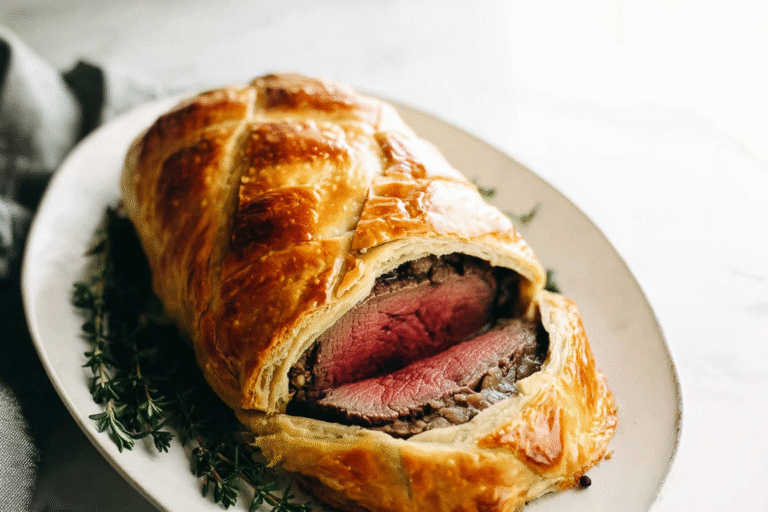
Beef Wellington
🥩 Experience the elegance of classic Beef Wellington, a perfectly seared fillet wrapped in savory mushroom duxelle and puff pastry.
🍽️ This recipe provides step-by-step instructions for a show-stopping dish that’s impressive yet achievable for special occasions.
- Total Time: About 2 hours 45 minutes
- Yield: 2 servings 1x
Ingredients
2 beef fillets (400g each)
Olive oil for frying
500g wild mushrooms (cleaned)
Leaves from 1 thyme sprig
500g puff pastry
8 slices of Parma ham
2 egg yolks beaten with 1 tablespoon water and a pinch of salt
Sea salt
Freshly ground black pepper
2 tablespoons olive oil for the red wine sauce
200g beef trimmings for the red wine sauce
4 large shallots peeled and sliced for the red wine sauce
12 black peppercorns for the red wine sauce
1 bay leaf for the red wine sauce
1 thyme sprig for the red wine sauce
A splash of red wine vinegar for the red wine sauce
750ml red wine for the red wine sauce
750ml beef stock for the red wine sauce
Instructions
1-Creating Beef Wellington involves a series of straightforward steps that build on each other for the best results. Start by wrapping each beef fillet tightly in triple layers of cling film and chilling them overnight to set their shape. Once chilled, remove the cling film and sear the fillets in hot olive oil for 30-60 seconds until browned but still rare inside, then let them cool completely.
2-Next, finely chop the wild mushrooms and fry them with olive oil, thyme leaves, and seasoning until all moisture evaporates, forming a mushroom duxelle paste; cool this mixture afterward. Cut the puff pastry in half and roll each piece into rectangles large enough to wrap the fillets, then chill the pastry sheets.
3-On a sheet of cling film, lay out four overlapping slices of Parma ham and spread the mushroom duxelle over it evenly. Season the beef fillets, place them on the mushroom-covered ham, and roll everything up tightly using the cling film to form logs; chill for 30 minutes. Brush the pastry with the egg wash, unwrap the beef logs, wrap them in the pastry, trim any excess, brush again with egg wash, and chill for another 30 minutes.
4-To make the red wine sauce, brown the beef trimmings in olive oil, then add the sliced shallots, peppercorns, bay leaf, and thyme sprig, cooking until golden. Add a splash of red wine vinegar and reduce it, followed by the red wine; boil until nearly completely reduced. Finally, add the beef stock and simmer for 1 hour until thickened, then strain and season to taste.
5-Before baking, score the pastry lightly and brush it with egg wash. Bake at 200°C for 15-20 minutes until golden, then rest the Beef Wellington for 10 minutes before slicing. Reheat the sauce and serve it alongside the sliced dish. This method ensures even cooking and a flaky exterior, and you can adjust steps for dietary needs like using plant-based proteins.
Last Step:
Please leave a rating and comment letting us know how you liked this recipe! This helps our business to thrive and continue providing free, high-quality recipes for you.Notes
🍖 Wrapping fillets in cling film before searing helps maintain their shape for neat presentation.
🍄 Cook mushroom duxelle thoroughly to remove moisture and intensify flavor.
🥧 Chill wrapped beef before baking to help pastry hold shape and prevent sogginess.
- Prep Time: 30 minutes (plus overnight chilling)
- Chilling time: Overnight + 1 hour
- Cook Time: 1 hour 15 minutes
- Category: Main Course
- Method: Baking and searing
- Cuisine: British
Nutrition
- Serving Size: 1 fillet with sauce