
Why You’ll Love This Moroccan Couscous
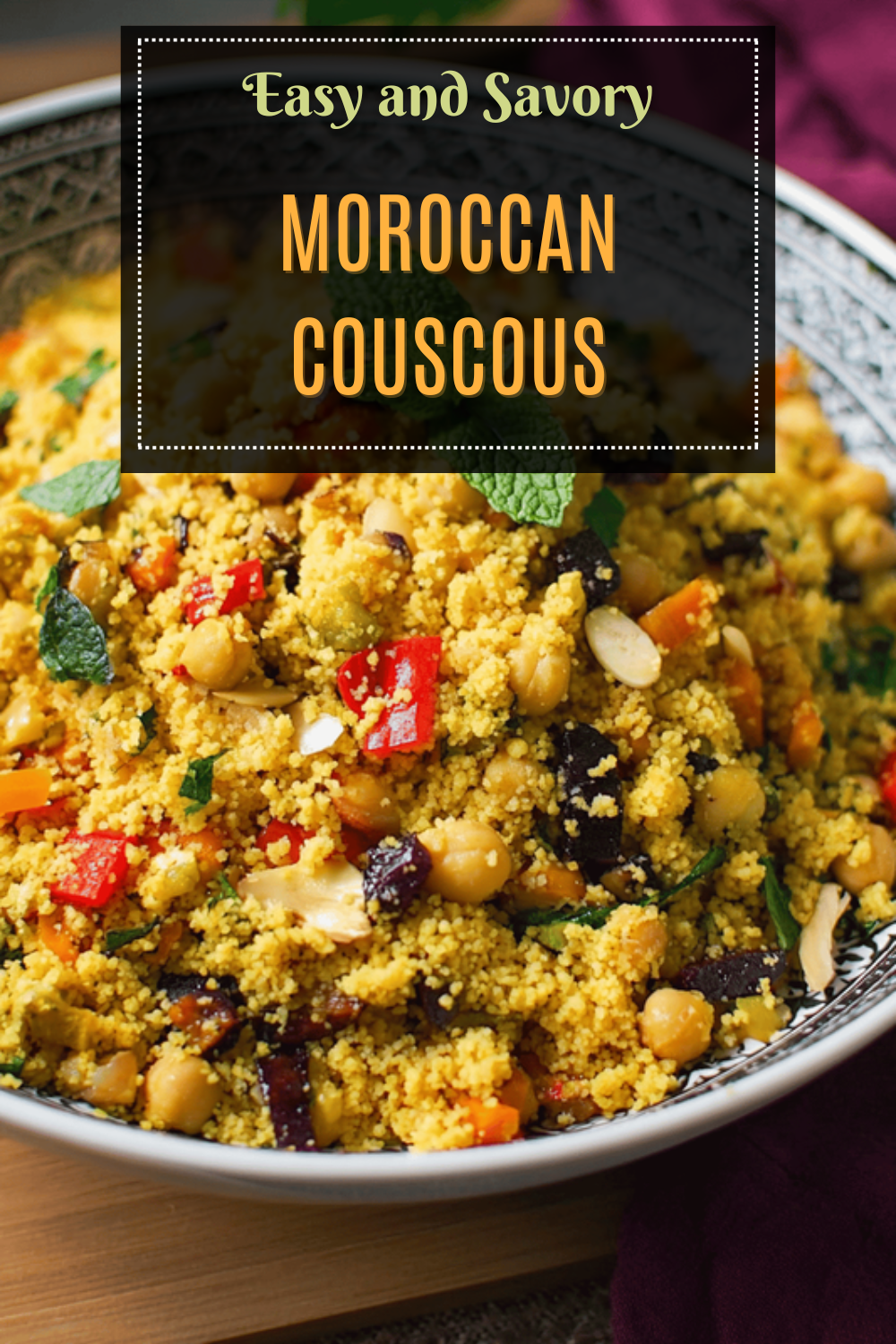
Moroccan couscous is a vibrant dish that brings the flavors of North Africa right to your kitchen, making it a fantastic choice for anyone eager to try new recipes. It’s quick to prepare, healthy, and full of flexibility to suit different tastes and diets. Let’s dive into what makes this recipe stand out and why it might become your go-to meal for busy days or family gatherings.
This Moroccan couscous recipe is simple and quick to make, perfect for busy weeknights. With minimal ingredients and straightforward cooking steps, you can have a delicious meal ready in under 30 minutes. Rich in fiber and packed with vitamins from fresh vegetables and spices, this dish supports digestion and overall wellness.
The use of natural herbs boosts antioxidants and promotes a balanced diet. Plus, it’s adaptable to various dietary needs, letting you make it vegan, gluten-free, or low-calorie by swapping ingredients without losing that amazing taste. The unique blend of spices like cumin, coriander, and turmeric gives this dish a rich and aromatic profile that sets it apart.
For more on how this recipe fits into a healthy lifestyle, check out this guide to couscous benefits. If you’re looking for a sweet treat to follow your meal, try our blueberry pie recipe for a refreshing dessert option.
Jump to:
- Why You’ll Love This Moroccan Couscous
- Essential Ingredients for Moroccan Couscous
- How to Prepare the Perfect Moroccan Couscous: Step-by-Step Guide
- Dietary Substitutions to Customize Your Moroccan Couscous
- Mastering Moroccan Couscous: Advanced Tips and Variations
- How to Store Moroccan Couscous: Best Practices
- FAQs: Frequently Asked Questions About Moroccan Couscous
- What is Moroccan couscous and how is it different from regular couscous?
- How do I cook Moroccan couscous at home from scratch?
- What traditional dishes are served with Moroccan couscous?
- Can Moroccan couscous be made gluten-free?
- How should Moroccan couscous be stored and reheated?
- Moroccan Couscous
- Ingredients
- Instructions
- Last Step:
- Notes
- Nutrition
- Did you make this recipe?
Essential Ingredients for Moroccan Couscous
Gathering the right ingredients is key to making a tasty Moroccan couscous. This section lists everything you need for this flavorful dish, based on a classic recipe with roasted vegetables, chickpeas, and almonds. We’ll format it clearly so you can easily follow along and prepare your ingredients ahead of time.
- 1 large red bell pepper, cored and diced
- 2 carrots, halved lengthwise and sliced fairly thin
- 1 onion, diced into 1-inch chunks
- 1 zucchini, halved lengthwise and sliced
- 4 tablespoons olive oil, divided
- 2 tablespoons lemon juice
- 2 teaspoons garlic, minced (about 2 cloves)
- 1 teaspoon cumin
- 1 teaspoon coriander
- 1/2 teaspoon cinnamon
- 1/2 teaspoon turmeric
- 1 1/3 cups dry couscous
- 1 (14.5 oz) can low-sodium chicken broth
- 1/2 cup raisins
- 1 (14 oz) can chickpeas, drained and rinsed
- 1/2 cup slivered almonds, toasted
- 3 tablespoons minced fresh cilantro
- 2 tablespoons minced fresh mint
- Salt to taste
These ingredients create a hearty, nutritious meal that’s full of flavor. If you’re watching your diet, remember you can swap items to make it vegan or gluten-free. For instance, use vegetable broth instead of chicken broth for a plant-based version.
How to Prepare the Perfect Moroccan Couscous: Step-by-Step Guide
Ready to whip up some Moroccan couscous? This step-by-step guide makes it easy, even if you’re new to cooking. We’ll walk through each part so you can enjoy a fresh, homemade dish in no time. First, gather all your ingredients to set yourself up for success.
Gather all ingredients and chop vegetables finely to ensure a smooth cooking process. Heat olive oil in a large pan over medium heat and add onions and garlic, sauté until translucent, about 5 minutes. Stir in spices like cumin, coriander, and turmeric to toast them lightly for enhanced aroma, about 1 minute.
Add mixed vegetables and cook for 7-10 minutes until tender but still vibrant. Pour in vegetable broth and bring to a gentle simmer, then add chickpeas and cook for another 5 minutes. Meanwhile, prepare couscous by placing it in a bowl, covering with hot water or broth, and letting it steam covered for 5 minutes before fluffing with a fork.
Combine the cooked vegetables and broth mixture with the couscous, mixing gently. Adjust seasoning with salt and options like those in the recipe, such as lemon juice for a zesty kick. Garnish with fresh herbs and serve warm for the best taste, taking just about 32 minutes from start to finish.

Dietary Substitutions to Customize Your Moroccan Couscous
One great thing about Moroccan couscous is how you can tweak it to fit your needs. Whether you’re avoiding gluten or want to add more protein, these swaps keep the dish delicious. Let’s look at some easy changes you can make right in your kitchen.
Replace chickpeas with grilled chicken or lamb for non-vegetarian options. For vegan protein, use tofu cubes or tempeh marinated in spices. Gluten-free grains like millet, quinoa, or rice can substitute traditional couscous.
Swap seasonal vegetables such as sweet potato, eggplant, or kale depending on availability. Use harissa paste or smoked paprika to add heat and depth. Adjust seasoning levels or replace spices like cumin with cinnamon for a sweeter twist.
Mastering Moroccan Couscous: Advanced Tips and Variations
Once you’re comfortable with the basics, you can level up your Moroccan couscous game. Here are some pro tips to make your dish even better and more unique. Try these ideas to add your own spin and impress your friends and family.
Toast the couscous grains before hydration to enhance nuttiness, or use a couscoussier for a traditional light texture. Experiment with dried fruits like raisins for sweetness, or add preserved lemons for tang. Serve in a communal platter garnished with toasted almonds and fresh herbs for an authentic Moroccan feel.
Prepare vegetable stew and couscous separately and store in airtight containers for make-ahead meals. If you enjoy exploring flavors, this dish pairs well with other recipes on our site, such as our zesty lemon bars for a citrusy dessert. Remember, the key is in the spices and fresh ingredients to keep that Moroccan couscous vibe alive.
How to Store Moroccan Couscous: Best Practices
Storing your Moroccan couscous properly helps keep it tasty for later. Whether you’re saving leftovers or prepping ahead, follow these steps to maintain that fresh flavor. This way, you can enjoy your meal without any fuss on busy days.
Store leftovers in an airtight container and keep in the fridge for up to 3 days to maintain texture. Freeze Moroccan couscous for up to 2 months by separating couscous and vegetable portions to avoid sogginess. Thaw in the fridge overnight before reheating.
Warm couscous gently over low heat with a splash of broth to rehydrate, or microwave with a cover to retain moisture. Cook couscous and vegetables in bulk and store in portioned containers for grab-and-go meals throughout the week. For more on healthy eating, explore this resource on chickpeas nutrition.
FAQs: Frequently Asked Questions About Moroccan Couscous
What is Moroccan couscous and how is it different from regular couscous?
Moroccan couscous is a traditional North African dish made from tiny steamed semolina grains. Unlike instant or pre-steamed couscous commonly found in stores, Moroccan couscous is traditionally steamed multiple times over a pot of simmering stew, giving it a light, fluffy texture. It’s typically served with a flavorful broth, vegetables, and meats, making it a complete meal. This steaming process distinguishes it from other couscous varieties like Israeli or Lebanese couscous, which are larger and have different cooking methods.
How do I cook Moroccan couscous at home from scratch?
To cook Moroccan couscous at home, start by sprinkling the dry semolina with cold water and rubbing it between your hands to form tiny granules. Then, steam the couscous over boiling water or broth for about 20 minutes. After steaming, fluff it with a fork and sprinkle with a little olive oil or butter to prevent clumping. Repeat steaming and fluffing 1-2 times for the best texture. This process results in light, separated grains ideal for serving with stews or roasted vegetables.
What traditional dishes are served with Moroccan couscous?
Moroccan couscous is commonly served with slow-cooked tagines or stews featuring lamb, chicken, or beef combined with vegetables like carrots, zucchini, chickpeas, and raisins. Common spices include cumin, coriander, cinnamon, and saffron. A popular combination is couscous with seven vegetables or a spicy harissa sauce on the side. These dishes highlight the balance of savory and sweet flavors typical in Moroccan cuisine and make couscous a hearty, flavorful main course.
Can Moroccan couscous be made gluten-free?
Traditional Moroccan couscous is made from semolina wheat and contains gluten, which is not suitable for people with celiac disease or gluten sensitivity. As an alternative, you can substitute it with gluten-free grains like millet, corn couscous, or quinoa. These options can be prepared using similar steaming or boiling methods to replicate couscous’s texture, making them suitable gluten-free choices while still complementing traditional Moroccan dishes.
How should Moroccan couscous be stored and reheated?
Store cooked Moroccan couscous in an airtight container in the refrigerator for up to 3-4 days. To reheat, sprinkle a little water or broth over the couscous and cover it with a damp paper towel to retain moisture. Warm it gently in the microwave or steam it over simmering water until heated through. Avoid reheating for too long to prevent dryness. This method keeps the couscous fluffy and prevents it from becoming clumpy or hard.
Moroccan Couscous
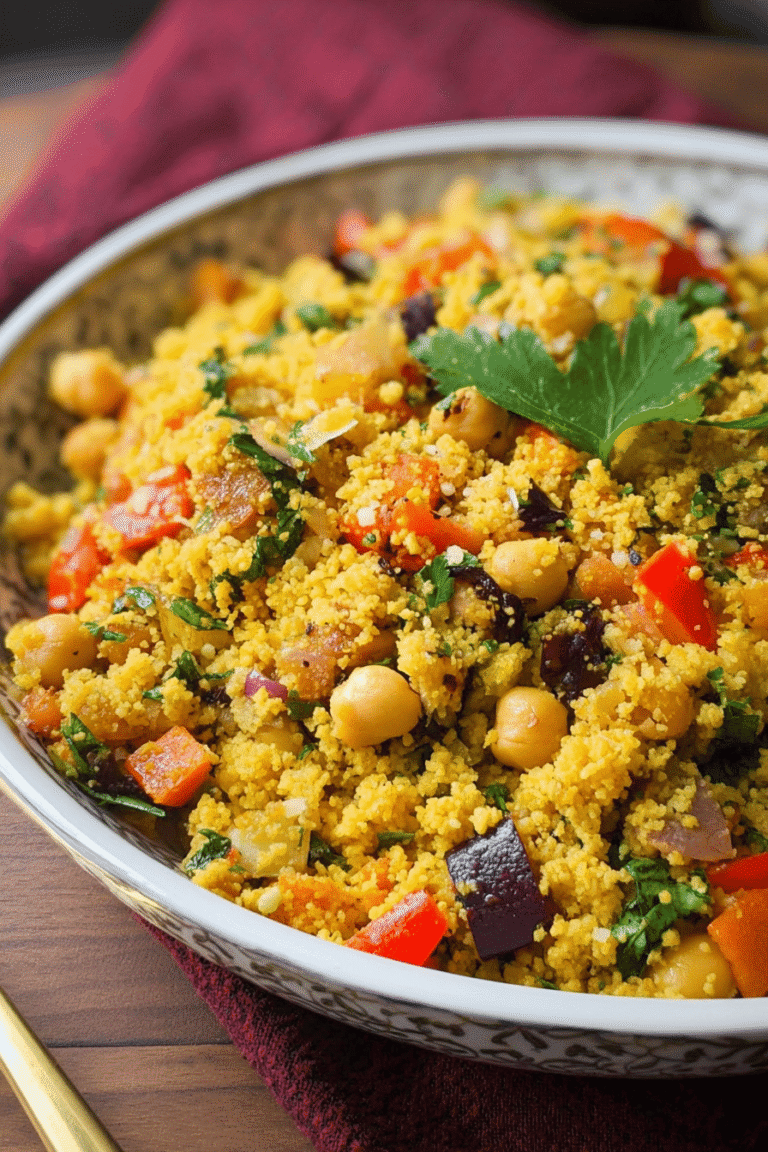
🥘 This Moroccan Couscous with Roasted Vegetables, Chickpeas, and Almonds Recipe offers a hearty and nutritious meal packed with vibrant flavors.
🌿 Combining roasted vegetables with protein-rich chickpeas and crunchy almonds makes it both satisfying and wholesome.
- Total Time: 32 minutes
- Yield: 7 servings
Ingredients
– 1 large red bell pepper, cored and diced
– 2 carrots, halved lengthwise and sliced fairly thin
– 1 onion, diced into 1-inch chunks
– 1 zucchini, halved lengthwise and sliced
– 4 tablespoons olive oil, divided
– 2 tablespoons lemon juice
– 2 teaspoons garlic, minced (about 2 cloves)
– 1 teaspoon cumin
– 1 teaspoon coriander
– 1/2 teaspoon cinnamon
– 1/2 teaspoon turmeric
– 1 1/3 cups dry couscous
– 1 (14.5 oz) can low-sodium chicken broth
– 1/2 cup raisins
– 1 (14 oz) can chickpeas, drained and rinsed
– 1/2 cup slivered almonds, toasted
– 3 tablespoons minced fresh cilantro
– 2 tablespoons minced fresh mint
– Salt to taste
Instructions
1-Gather all ingredients and chop vegetables finely to ensure a smooth cooking process. Heat olive oil in a large pan over medium heat and add onions and garlic, sauté until translucent, about 5 minutes. Stir in spices like cumin, coriander, and turmeric to toast them lightly for enhanced aroma, about 1 minute.
2-Add mixed vegetables and cook for 7-10 minutes until tender but still vibrant. Pour in vegetable broth and bring to a gentle simmer, then add chickpeas and cook for another 5 minutes. Meanwhile, prepare couscous by placing it in a bowl, covering with hot water or broth, and letting it steam covered for 5 minutes before fluffing with a fork.
3-Combine the cooked vegetables and broth mixture with the couscous, mixing gently. Adjust seasoning with salt and options like those in the recipe, such as lemon juice for a zesty kick. Garnish with fresh herbs and serve warm for the best taste, taking just about 32 minutes from start to finish.
Last Step:
Please leave a rating and comment letting us know how you liked this recipe! This helps our business to thrive and continue providing free, high-quality recipes for you.Notes
🥕 Customize with your preferred vegetables or what’s available.
🍗 Pairs well with chicken, fish, lamb, or beef for a complete meal.
🔥 Broiling vegetables after roasting adds a subtle char flavor; toasting almonds enhances crunch and taste.
- Prep Time: 10 minutes
- undefined: undefined
- Cook Time: 22 minutes
- Category: Main Dish
- Method: Roasting and Mixing
- Cuisine: Moroccan
Nutrition
- Serving Size: 1 serving
- Calories: 362
- Sugar: 4g
- Sodium: 199mg
- Fat: 13g
- Saturated Fat: 1g
- Carbohydrates: 50g
- Fiber: 7g
- Protein: 9g