
Why You’ll Love This Turkey Roulade
This turkey roulade recipe offers a straightforward way to enjoy a flavorful, impressive main dish that’s perfect for gatherings or everyday meals. With its blend of sage and rosemary, it delivers a burst of fresh herbs that make each bite memorable, all while keeping things simple for home cooks. Whether you’re a busy parent whipping up dinner quickly or a food enthusiast experimenting in the kitchen, this dish stands out for its ease and taste.
Beyond the simplicity, turkey roulade packs in health benefits like high protein from lean turkey meat, which supports muscle health and keeps you feeling full longer. It’s adaptable to different diets, making it a go-to option for anyone watching their calories or avoiding gluten. The combination of herbs and slow roasting creates a juicy, tender result that’s far from ordinary turkey, turning a basic ingredient into something special.
Key Benefits Highlighted
- Simple prep that fits into tight schedules, ideal for students or working professionals.
- Nutrient-rich profile with herbs like sage and rosemary adding vitamins and antioxidants.
- Flexible for various occasions, from family dinners to holiday feasts for newlyweds or seniors.
If you’re looking for a recipe that balances convenience with delicious flavors, this turkey roulade fits the bill. Many home cooks appreciate how it elevates a standard meal without overwhelming effort, making it a favorite among party hosts and baking enthusiasts alike.
Jump to:
- Why You’ll Love This Turkey Roulade
- Key Benefits Highlighted
- Essential Ingredients for Turkey Roulade
- Main Ingredients
- Ingredients for Gravy
- How to Prepare the Perfect Turkey Roulade: Step-by-Step Guide
- Dietary Substitutions to Customize Your Turkey Roulade
- Protein and Main Component Alternatives
- Vegetable, Sauce, and Seasoning Modifications
- Mastering Turkey Roulade: Advanced Tips and Variations
- Pro Techniques
- Flavor and Presentation Ideas
- How to Store Turkey Roulade: Best Practices
- FAQs: Frequently Asked Questions About Turkey Roulade
- Can I prepare a turkey roulade ahead of time and how should I store it?
- What is the best internal temperature to cook a turkey roulade safely without drying it out?
- How can I keep my turkey roulade moist during roasting?
- Can I use a store-bought turkey roll for a roulade recipe, and how do I adapt it?
- What roasting temperature and time work best for cooking turkey roulade evenly?
- Turkey Roulade
- Ingredients
- Instructions
- Last Step:
- Notes
- Nutrition
- Did you make this recipe?
Essential Ingredients for Turkey Roulade
Gathering the right ingredients is key to making a delicious turkey roulade. This recipe focuses on fresh, simple items that bring out the best flavors through sage and rosemary seasoning. Below, you’ll find a complete list based on the core recipe, ensuring you have everything needed for success.
Main Ingredients
- Whole turkey breast (two connected pieces with bone and skin on)
- 15 20 loosely packed sage leaves (about ½ cup)
- 4 sprigs rosemary leaves
- 6 8 garlic cloves
- 1 tablespoon brown sugar (can substitute honey or white sugar)
- 2 teaspoons black peppercorns (adjustable to taste)
- 2 teaspoons kosher salt or sea salt
- 1/4 cup vegetable oil plus extra for brushing
- Salt and pepper for seasoning at the end
Ingredients for Gravy
- 2 3 cups chicken stock (preferably unsalted)
- 3 tablespoons butter
- 3 tablespoons flour
- Black pepper and additional salt as needed
This structured list makes it easy to shop and measure precisely, helping beginners avoid mistakes. For instance, using the exact amounts of herbs ensures the seasoning shines without overpowering the turkey.
How to Prepare the Perfect Turkey Roulade: Step-by-Step Guide
Follow these steps to create a turkey roulade that’s juicy and full of flavor. Start by prepping your ingredients and workspace for smooth sailing. This method uses a whole turkey breast, which you butterfly and season for even cooking.
- Butterfly the whole turkey breast by making shallow cuts and preparing the skin to lay it flat.
- Make a spice paste by processing sage leaves, rosemary leaves, garlic cloves, brown sugar, black peppercorns, salt, and 1/4 cup vegetable oil until smooth.
- Spread the spice paste evenly over the butterflied turkey breast for full flavor infusion.
- Roll the turkey breast tightly into a roulade and wrap it with the turkey skin to lock in moisture.
- Secure with kitchen twine, wrap in plastic, and refrigerate overnight or up to one day to enhance flavors.
- Remove from the fridge 1 2 hours before roasting to bring it to room temperature.
- Preheat oven to 450°F (230°C).
- Place roulade on a parchment-lined baking sheet, pat dry, brush with oil, and season with salt and pepper.
- Roast at 450°F for 10 15 minutes to caramelize the skin.
- Reduce oven temperature to 275°F (135°C) and roast for 20 30 minutes per pound, or until internal temperature reaches 162°F, basting with pan drippings every 20 minutes.
- Remove from oven, cover loosely with foil, and rest for 20 30 minutes to retain juices.
- Optionally, broil the roulade briefly for extra caramelization, watching carefully to avoid burning.
- Slice the roulade and serve with gravy made from pan drippings.
To make the gravy, measure pan drippings and add chicken stock to total 2 cups, then melt butter in a pot and whisk in flour to form a roux. Cook until browned, whisk in stock and drippings, season, and simmer to desired consistency. This guide works for all skill levels and can be adjusted as needed, like using a wire rack for better moisture during roasting. For more dessert ideas to pair with your meal, check out our strawberry shortcake recipe on the blog.

Dietary Substitutions to Customize Your Turkey Roulade
Adapting this turkey roulade to fit various diets is simple and keeps the dish exciting. For example, if you’re aiming for a lower-sugar option, swap brown sugar with honey in the paste. These changes maintain the core flavors while meeting personal needs.
Protein and Main Component Alternatives
- Substitute ground turkey with ground chicken or lean pork for different flavors, though this recipe uses whole turkey breast.
- For vegan diets, use lentil or chickpea-based substitutes, adjusting the paste with plant-based oils.
- Low-fat tofu can replace meat for vegetarian versions, ensuring the roll holds together with extra binding agents.
Vegetable, Sauce, and Seasoning Modifications
- Replace onions if added, with leeks for a milder taste, though none are in this recipe.
- Use basil or thyme instead of rosemary for seasonal twists.
- For dairy-free gravy, omit butter and use a plant-based alternative like margarine.
- Reduce salt for low-sodium diets or add chili flakes for extra spice.
These swaps make the recipe versatile for food enthusiasts and travelers. By trying these, you can create a personalized version that still highlights the turkey roulade’s charm.
Mastering Turkey Roulade: Advanced Tips and Variations
Taking your turkey roulade to the next level involves a few expert techniques that ensure great results every time. For instance, evenly spreading the herb paste, including on the fat, helps keep the meat moist during slow roasting. This step is crucial for achieving that perfect, juicy texture.
Pro Techniques
- Use a meat thermometer to hit 162°F internally; the heat will continue cooking it slightly after removal.
- Lightly sear before baking to lock in juices, enhancing the overall flavor.
Flavor and Presentation Ideas
Incorporate sun-dried tomatoes for a twist, or serve on a bed of veggies for appeal. For more creative baking, explore our vanilla cupcakes to complement your roulade at dessert time. Resting the roulade covered in foil lets juices redistribute, making slices even better.
| Nutrient | Per 7 oz Serving |
|---|---|
| Calories | 525 |
| Protein | 75g |
| Fat | 23g |
| Carbohydrates | 9g |
Remember, rolling tightly ensures even cooking, as shared in many home cook tips.
How to Store Turkey Roulade: Best Practices
Proper storage keeps your turkey roulade fresh and safe to eat later. After cooling, place it in an airtight container to avoid spoilage. This method works well for busy parents or working professionals needing quick meals.
- Refrigerate cooked roulade and use within 4-5 days for optimal taste.
- Freeze by wrapping tightly and storing up to 3 months, using parchment between slices.
- Reheat in a 325°F oven, covered, to keep it moist.
- Portion before storing for easy access in meal prep.
These practices help maintain the roulade’s flavors, making it a convenient option for all.
FAQs: Frequently Asked Questions About Turkey Roulade
Can I prepare a turkey roulade ahead of time and how should I store it?
Yes, you can prepare a turkey roulade up to one day in advance. After cooking, let it cool completely, then wrap it tightly in plastic wrap or place it in an airtight container before refrigerating. When ready to serve, reheat it slowly in a preheated oven at around 300°F (150°C), covering it with foil to prevent drying out. This method keeps the roulade moist and flavorful.
What is the best internal temperature to cook a turkey roulade safely without drying it out?
The turkey roulade should be cooked until it reaches an internal temperature of 160 to 162°F (71 to 72°C). Residual heat will raise the temperature to the safe 165°F (74°C) after removing it from the oven. Using a meat thermometer to check the thickest part ensures it is fully cooked while keeping the meat juicy.
How can I keep my turkey roulade moist during roasting?
To maintain moisture, spread an herb paste mixed with butter or oil inside the roulade. Wrapping the roulade with turkey skin or bacon also helps lock in juices. Roast the roulade on a wire rack over some stock or water to create steam, and baste occasionally with pan drippings. Letting the roulade rest covered with foil for 15–20 minutes before slicing allows the juices to redistribute.
Can I use a store-bought turkey roll for a roulade recipe, and how do I adapt it?
Store-bought turkey rolls can be used, but typically they cannot be unrolled for filling. Instead, apply the herb paste on the outside and baste while cooking to infuse flavor. Keep in mind the flavor inside won’t be as pronounced as a freshly rolled turkey breast, but this shortcut speeds up prep time.
What roasting temperature and time work best for cooking turkey roulade evenly?
Start roasting the turkey roulade at a high heat of 450°F (232°C) for about 15 minutes to brown and crisp the skin. Then lower the oven temperature to 275-300°F (135-150°C) to finish cooking slowly, which helps retain moisture. Cooking time is roughly 20-30 minutes per pound but monitor internal temperature to avoid overcooking.
Turkey Roulade
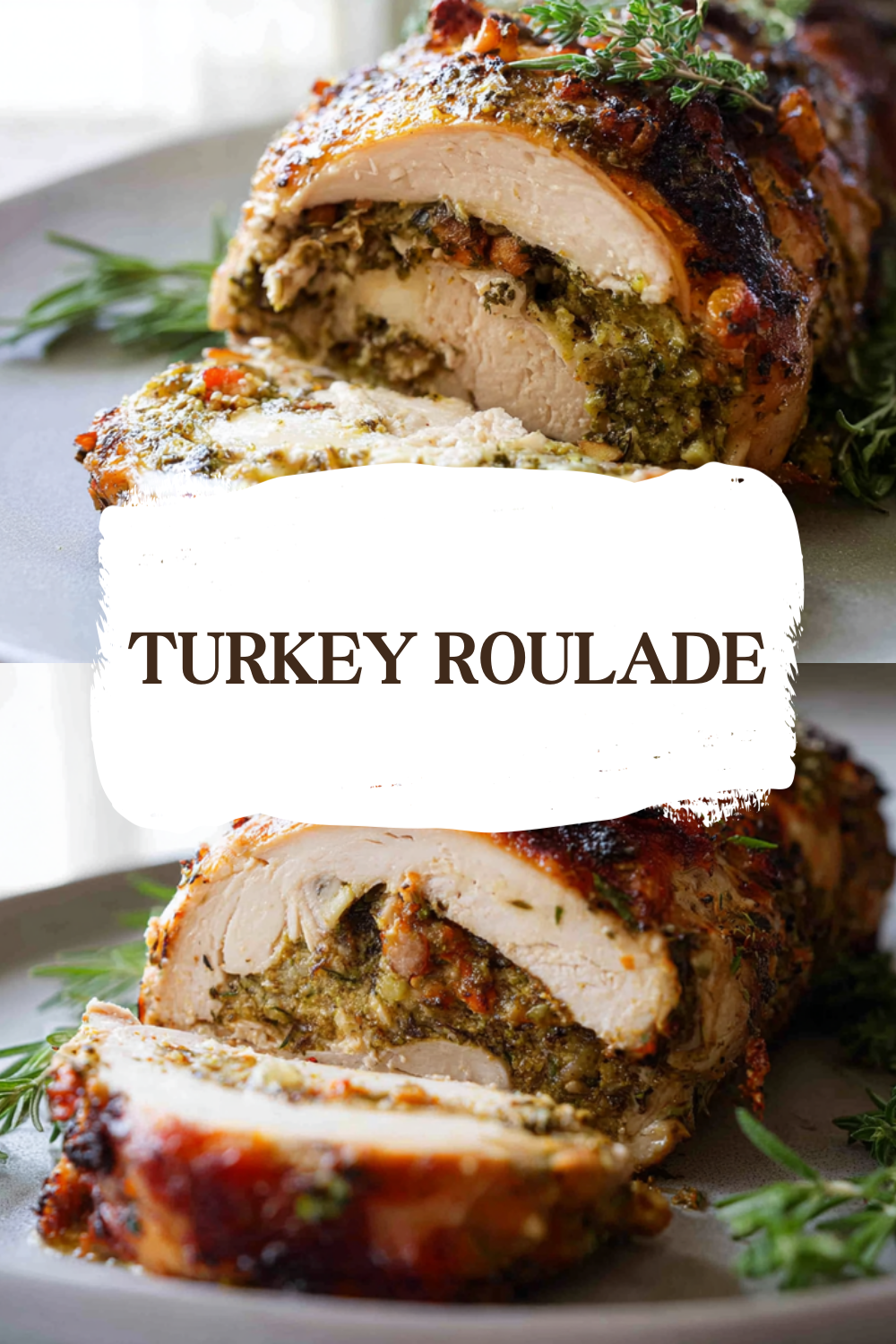
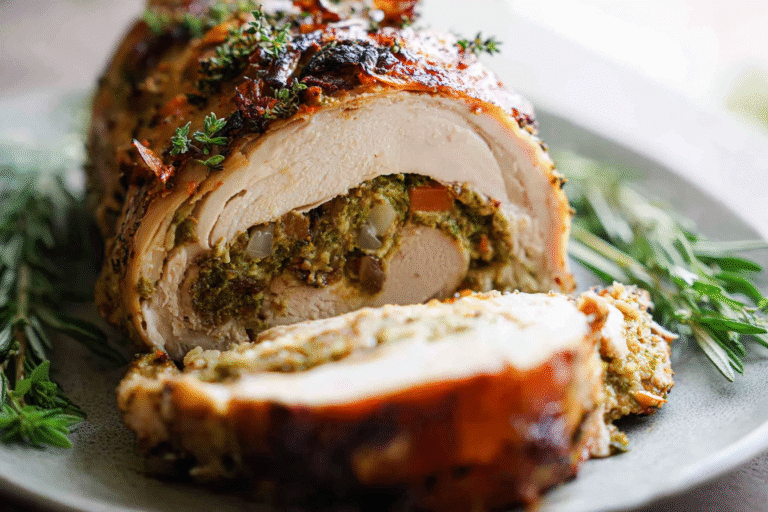
🦃 This Slow Roasted Turkey Roulade is infused with the fragrant flavors of sage and rosemary, creating a tender and juicy main dish.
🌿 The slow roasting method ensures moist, evenly cooked turkey with a beautifully caramelized skin, perfect for special occasions.
- Total Time: 11 hours (including marinating and cooking)
- Yield: 6–8 servings 1x
Ingredients
Whole turkey breast (two connected pieces with bone and skin on)
15 20 loosely packed sage leaves (about ½ cup)
4 sprigs rosemary leaves
6 8 garlic cloves
1 tablespoon brown sugar (can substitute honey or white sugar)
2 teaspoons black peppercorns (adjustable to taste)
2 teaspoons kosher salt or sea salt
1/4 cup vegetable oil plus extra for brushing
Salt and pepper for seasoning at the end
2 3 cups chicken stock (preferably unsalted)
3 tablespoons butter
3 tablespoons flour
Black pepper and additional salt as needed
Instructions
1-Butterfly the whole turkey breast by making shallow cuts and preparing the skin to lay it flat.
2-Make a spice paste by processing sage leaves, rosemary leaves, garlic cloves, brown sugar, black peppercorns, salt, and 1/4 cup vegetable oil until smooth.
3-Spread the spice paste evenly over the butterflied turkey breast for full flavor infusion.
4-Roll the turkey breast tightly into a roulade and wrap it with the turkey skin to lock in moisture.
5-Secure with kitchen twine, wrap in plastic, and refrigerate overnight or up to one day to enhance flavors.
6-Remove from the fridge 1 2 hours before roasting to bring it to room temperature.
7-Preheat oven to 450°F (230°C).
8-Place roulade on a parchment-lined baking sheet, pat dry, brush with oil, and season with salt and pepper.
9-Roast at 450°F for 10 15 minutes to caramelize the skin.
10-Reduce oven temperature to 275°F (135°C) and roast for 20 30 minutes per pound, or until internal temperature reaches 162°F, basting with pan drippings every 20 minutes.
11-Remove from oven, cover loosely with foil, and rest for 20 30 minutes to retain juices.
12-Optionally, broil the roulade briefly for extra caramelization, watching carefully to avoid burning.
13-Slice the roulade and serve with gravy made from pan drippings.
Last Step:
Please leave a rating and comment letting us know how you liked this recipe! This helps our business to thrive and continue providing free, high-quality recipes for you.Notes
🌿 Spread herb paste evenly, including on fat, to keep turkey moist.
🔒 Roll tightly and wrap with skin for even cooking and moisture retention.
🌡️ Use high heat initially for caramelization, then slow roast to avoid drying; use meat thermometer to ensure perfect doneness.
- Prep Time: 3 hours (including deboning and rolling)
- Marinating time: 6 hours (overnight preferred)
- Cook Time: 2 hours (approximate)
- Category: Main Course
- Method: Roasting
- Cuisine: American
Nutrition
- Serving Size: 7 oz
- Calories: 525 kcal
- Sugar: 2 g
- Sodium: 1102 mg
- Fat: 23 g
- Saturated Fat: 9 g
- Carbohydrates: 9 g
- Fiber: 1 g
- Protein: 75 g
- Cholesterol: 212 mg