

Why You’ll Love This New England Fish Chowder
Imagine a warm bowl of New England fish chowder that brings comfort on chilly evenings with its creamy texture and fresh flavors. This recipe stands out because it’s simple to make, perfect for busy home cooks who want a hearty meal without spending hours in the kitchen. With fresh seafood and herbs adding a burst of taste, you’ll find yourself coming back to this dish again and again.
One major benefit is its ease of preparation. This New England fish chowder comes together in about 30 minutes, making it ideal for busy parents or working professionals who need a quick yet satisfying dinner. You can chop the onions and potatoes ahead of time, and the gentle poaching of the fish keeps things straightforward without fancy tools. It’s a recipe that fits into everyday life while delivering that classic, creamy New England fish chowder experience many food enthusiasts crave.
Health benefits make this recipe a winner for diet-conscious individuals. Packed with protein from tender whitefish like cod or haddock, it provides essential nutrients such as potassium, vitamin C, and iron per serving. The mix of potatoes, onions, and herbs adds fiber and vitamins, supporting a balanced diet without heavy calories. Plus, with just 249 calories per 1.5 cup serving, it’s a smart choice for those watching their intake while enjoying the fresh seafood in New England fish chowder.
Versatility is another reason to try this New England fish chowder with fresh seafood and herbs. You can tweak it for different dietary needs, swapping ingredients to make it gluten-free or low-calorie. Seniors and students might appreciate how it adapts to what’s in the pantry, like using evaporated milk instead of whole milk. Whether you’re a traveler experimenting with local catches or a newlywed hosting a simple meal, this dish flexes to suit various tastes and occasions.
Finally, the distinctive flavor sets this creamy New England fish chowder recipe apart. Seasoned with thyme, bay leaves, and a hint of nutmeg, it creates a comforting depth that highlights the herbs and fresh seafood. The infusion of onions into the milk adds a subtle layer that makes every bite special. Overall, this recipe combines simplicity, nutrition, and flavor in a way that appeals to baking enthusiasts and party hosts alike, making it a go-to for any gathering.
Jump to:
- Why You’ll Love This New England Fish Chowder
- Essential Ingredients for New England Fish Chowder
- Main Ingredients
- Special Dietary Options
- How to Prepare the Perfect New England Fish Chowder: Step-by-Step Guide
- First Step: Prepare Your Ingredients
- Second Step: Sauté the Onions
- Third Step: Add Liquids and Seasonings
- Fourth Step: Poach and Flake the Fish
- Fifth Step: Cook the Potatoes
- Sixth Step: Infuse and Add Milk
- Seventh Step: Combine and Season
- Final Step: Finish and Serve
- Dietary Substitutions to Customize Your New England Fish Chowder
- Protein and Main Component Alternatives
- Vegetable, Sauce, and Seasoning Modifications
- Mastering New England Fish Chowder: Advanced Tips and Variations
- How to Store New England Fish Chowder: Best Practices
- FAQs: Frequently Asked Questions About New England Fish Chowder
- What types of fish are best for making New England fish chowder?
- Can I add other seafood like shrimp or lobster to New England fish chowder?
- How do I thicken New England fish chowder without changing its flavor?
- What is the best way to store and reheat leftover fish chowder?
- Why is milk scalded with onion used in New England fish chowder?
- New England Fish Chowder
- Ingredients
- Instructions
- Last Step:
- Notes
- Nutrition
- Did you make this recipe?
Essential Ingredients for New England Fish Chowder
Gathering the right ingredients is key to making a delicious New England fish chowder. This section lists everything you need, based on the recipe details provided. I’ll present them in a clear, structured format to help you shop and prepare with ease. Each item includes a brief explanation of its role for better understanding.
Main Ingredients
- Butter and olive oil for sautéing – These fats help cook the onions without browning, adding a smooth base flavor to the chowder.
- Yellow onions chopped and one quartered for infusing milk – Chopped onions build the foundation flavor when sautéed, while the quartered one adds subtle depth to the milk.
- Water – Serves as the primary liquid for poaching the fish and boiling the potatoes, keeping the broth light and fresh.
- Bay leaves – These herbs infuse a gentle, aromatic essence into the soup for added depth.
- Thyme (dried or fresh) – Provides earthy notes that complement the seafood and enhance the overall taste of the New England fish chowder.
- Kosher salt – Seasons the broth to balance flavors and bring out the natural sweetness of the ingredients.
- Black pepper – Adds a mild spice that pairs well with the herbs and fresh seafood in this creamy New England fish chowder recipe.
- Cod or other whitefish such as haddock, tilapia, snapper, monkfish, barramundi, or salmon – The star protein that flakes perfectly when poached, offering a tender texture central to New England fish chowder with fresh seafood and herbs.
- Clam juice (optional; can be replaced by additional water or milk plus salt) – Boosts the seafood flavor, but you can skip it for a milder version.
- Potatoes (red or other varieties, peeled or unpeeled and diced into chunks) – Adds heartiness and absorbs flavors, making the chowder more filling.
- Whole milk (scalded with onion; evaporated milk is a substitute) – Creates the creamy base, with the onion infusion adding extra layers of taste.
- Fresh chives, minced – Brings a fresh, onion-like brightness as a garnish or mix-in for the herbs in your New England fish chowder.
- Ground nutmeg – Adds a warm, nutty spice that elevates the dish’s comforting profile.
- Heavy cream (half and half can be used if necessary) – Ensures the chowder is rich and creamy, finishing the soup with a silky texture.
- Additional fresh chives, nutmeg, black pepper, and cold butter pats for garnish (optional) – These enhance presentation and flavor, making your New England fish chowder with fresh seafood and herbs even more appealing.
Special Dietary Options
For those with specific needs, here are some easy swaps to customize your New England fish chowder:
- Vegan: Replace butter with a plant-based alternative, use almond milk instead of whole milk, and swap heavy cream for coconut cream; this keeps the creamy texture while focusing on fresh seafood substitutes like tofu or mushrooms for a plant-based twist.
- Gluten-free: This recipe is naturally gluten-free, but double-check any added broths or substitutes to ensure no hidden gluten slips in.
- Low-calorie: Opt for low-fat milk and half the amount of heavy cream, or use more water and less oil, to reduce calories without losing the essence of fresh herbs and seafood in your New England fish chowder.
How to Prepare the Perfect New England Fish Chowder: Step-by-Step Guide
Diving into making New England fish chowder is a fun way to bring fresh seafood and herbs to your table. This guide walks you through each step with clear instructions, timings, and tips to make it simple. Let’s get started with the basics to ensure your creamy New England fish chowder recipe turns out just right.
First Step: Prepare Your Ingredients
Begin by gathering and prepping all your ingredients to make the process smooth. Chop the yellow onions one for sautéing and one quartered for the milk. Dice the potatoes into chunks, and prepare the fish by cutting it into pieces. This mise en place, which takes about 10 minutes, helps everything flow easily and lets you focus on the fresh seafood flavors in your New England fish chowder.
Second Step: Sauté the Onions
Melt the butter with olive oil in a large pot over medium heat. Add the chopped onions and sauté them until they turn translucent, which should take around 5 minutes. Keep the heat steady to avoid browning, as this step builds a gentle base for your New England fish chowder with fresh seafood and herbs. Stir occasionally to ensure even cooking and enhance the overall taste.
Third Step: Add Liquids and Seasonings
Once the onions are ready, pour in the water, along with bay leaves, thyme, salt, and pepper. Bring this mixture to a boil over medium-high heat, which takes about 5 minutes. This step infuses the broth with herbs, setting the stage for the poached fish in your creamy New England fish chowder recipe. Adjust the seasoning here to suit your preferences for a more personalized touch.
Fourth Step: Poach and Flake the Fish
Gently add the fish pieces to the pot, making sure they’re mostly covered but not fully submerged. Simmer on low heat for 4-5 minutes until the fish flakes easily. Use a slotted spoon to remove the fish, then cool it briefly in the fridge or freezer for a few minutes. Flake the fish by hand, keeping the pieces intact, which adds the perfect texture to your New England fish chowder with fresh seafood and herbs and takes another 5 minutes.
Fifth Step: Cook the Potatoes
Stir in the clam juice and diced potatoes to the pot, then bring it back to a boil. Cover and simmer until the potatoes are tender, about 15 minutes. This step builds the heartiness of the chowder, allowing the fresh ingredients to meld together. For dietary adaptations, you could use sweet potatoes here for a lower-carb option in your New England fish chowder.
Sixth Step: Infuse and Add Milk
While the potatoes cook, scald the whole milk with the quartered onion in a small pot. Bring it to a boil, then reduce to low and simmer uncovered for 5-7 minutes. Strain out the onion pieces to remove any solids. This infused milk adds depth to your creamy New England fish chowder recipe, and you can substitute evaporated milk if needed for a quicker prep.
Seventh Step: Combine and Season
Add the strained milk to the pot, then mix in the minced chives and ground nutmeg. Gently return the flaked fish to the pot and stir carefully to avoid breaking the flakes. Bring everything to a simmer for a couple of minutes, which helps blend the flavors of fresh seafood and herbs in your New England fish chowder. Taste and adjust seasoning as needed for the best results.
Final Step: Finish and Serve
Stir in the heavy cream carefully, then turn off the heat. Let the chowder sit for a minute to thicken slightly. Serve it hot, garnished with extra chives, nutmeg, black pepper, and cold butter pats if you like. This step, which takes about 2 minutes, ensures your New England fish chowder is creamy and ready to enjoy, perhaps with a side of crusty bread. For variations, try a refreshing drink alongside it to complement the meal.
| Step | Time Required | Tips for Adaptation |
|---|---|---|
| Sauté Onions | 5 minutes | Use low heat for dietary needs to keep flavors mild. |
| Poach Fish | 4-5 minutes | Adapt for low-calorie by using less oil. |
| Cook Potatoes | 15 minutes | Swap for gluten-free options if necessary. |

Dietary Substitutions to Customize Your New England Fish Chowder
Protein and Main Component Alternatives
If you’re looking to switch up the main protein in your New England fish chowder, consider options that keep the dish hearty. For instance, replace cod with haddock or tilapia for a similar flaking texture, which works well for travelers using local catches. Salmon adds a richer taste, making it ideal for food enthusiasts wanting a bolder flavor, and these changes help maintain the essence of fresh seafood in your recipe.
Vegetable, Sauce, and Seasoning Modifications
Adapt vegetables by swapping potatoes for carrots or celery to suit seasonal availability or preferences, which can make your New England fish chowder lighter. For sauces, use half and half instead of heavy cream for a lower-fat version, or adjust seasonings like thyme with other herbs for dietary restrictions. These tweaks ensure your creamy New England fish chowder recipe stays versatile and delicious. For more ideas on flavors, explore fruit-based recipes that might inspire herb combinations.
Mastering New England Fish Chowder: Advanced Tips and Variations
Taking your New England fish chowder to the next level involves some pro techniques and creative twists. Let’s look at ways to refine your skills and adapt the recipe for fun. First, focus on pro cooking techniques like using a fish spatula for gentle handling, which prevents the fresh seafood from breaking apart.
- Flavor variations: Experiment with different herbs, such as adding parsley alongside thyme, to enhance the fresh seafood profile in your New England fish chowder.
- Presentation tips: Garnish with a sprinkle of nutmeg and chives for an eye-catching bowl that highlights the herbs.
- Make-ahead options: Prep the broth in advance and store it, so busy parents can quickly assemble their creamy New England fish chowder recipe on weeknights.
When you master these tips, your New England fish chowder with fresh seafood and herbs becomes a signature dish that’ll impress at any gathering.
How to Store New England Fish Chowder: Best Practices
Proper storage keeps your New England fish chowder tasting great for later. Start with refrigeration for short-term needs, as it maintains the creamy texture. For freezing, use airtight containers to lock in flavors, and reheat gently to preserve quality.
- Refrigeration: Store in the fridge for up to 3 days to keep the fresh seafood safe and fresh.
- Freezing: Freeze in portions for up to 2 months, thawing overnight before use.
- Reheating: Warm on low heat to avoid separating the cream, stirring occasionally.
- Meal prep considerations: Batch cook and divide into containers for easy meals during the week.

FAQs: Frequently Asked Questions About New England Fish Chowder
What types of fish are best for making New England fish chowder?
Whitefish varieties like cod, haddock, tilapia, sea bass, monkfish, and snapper are ideal for New England fish chowder because they flake nicely and hold their texture well. Salmon can also be used for a richer flavor. It’s best to avoid very lean fish such as tuna or swordfish, as they don’t flake properly, and delicate fish like sole or flounder, which tend to fall apart in the soup. Using the right fish helps maintain a hearty and satisfying chowder texture.
Can I add other seafood like shrimp or lobster to New England fish chowder?
Yes, adding shrimp, lobster, or other shellfish can complement the fish and enhance the chowder’s flavor. If using cooked seafood, add it at the end along with the flaked fish to prevent overcooking. For raw shellfish, add it early with the fish and remove when done. This method ensures all seafood is tender without becoming rubbery or falling apart.
How do I thicken New England fish chowder without changing its flavor?
A simple way to thicken fish chowder is by stirring in a cornstarch slurry—mix equal parts cornstarch and cold water—just before adding the flaked fish back into the pot. Heat gently until the broth thickens to your desired consistency. Remember that adding heavy cream at the end will slightly thin the soup, so you may want to thicken it a bit more than usual for the perfect texture.
What is the best way to store and reheat leftover fish chowder?
Store leftover fish chowder in an airtight container in the refrigerator for up to 2-3 days. When reheating, warm it gently over low heat to avoid boiling, which can cause the cream to separate and the fish to overcook. Stir occasionally until just heated through to keep the chowder creamy and smooth.
Why is milk scalded with onion used in New England fish chowder?
Scalding milk with quartered onions infuses a subtle onion flavor throughout the chowder, adding depth without overpowering the dish. The milk is heated gently with onions and then strained before use, which enriches the broth’s taste and complements the seafood flavors, giving the chowder a rich, layered profile.
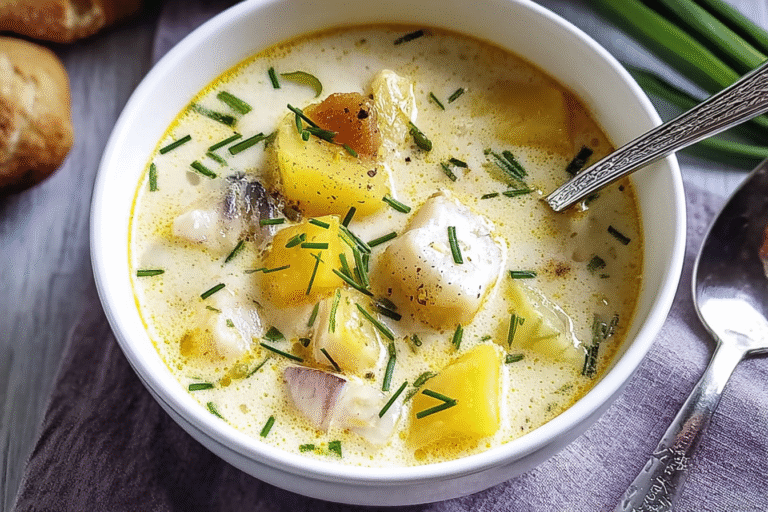
New England Fish Chowder
🐟 This Creamy New England Fish Chowder recipe offers a comforting, rich soup filled with tender whitefish and fresh herbs.
🍲 Perfect for warming up on chilly days, this chowder combines fresh seafood with creamy flavors and hearty vegetables for a satisfying meal.
- Total Time: 30 minutes
- Yield: 4 servings
Ingredients
Butter and olive oil for sautéing
Yellow onions chopped and one quartered for infusing milk
Water
Bay leaves
Thyme (dried or fresh)
Kosher salt
Black pepper
Cod or other whitefish such as haddock, tilapia, snapper, monkfish, barramundi, or salmon
Clam juice (optional; can be replaced by additional water or milk plus salt)
Potatoes (red or other varieties, peeled or unpeeled and diced into chunks)
Whole milk (scalded with onion; evaporated milk is a substitute)
Fresh chives, minced
Ground nutmeg
Heavy cream (half and half can be used if necessary)
Additional fresh chives, nutmeg, black pepper, and cold butter pats for garnish (optional)
Instructions
1-First Step: Prepare Your Ingredients: Begin by gathering and prepping all your ingredients to make the process smooth. Chop the yellow onions one for sautéing and one quartered for the milk. Dice the potatoes into chunks, and prepare the fish by cutting it into pieces. This mise en place, which takes about 10 minutes, helps everything flow easily and lets you focus on the fresh seafood flavors in your New England fish chowder.
2-Second Step: Sauté the Onions: Melt the butter with olive oil in a large pot over medium heat. Add the chopped onions and sauté them until they turn translucent, which should take around 5 minutes. Keep the heat steady to avoid browning, as this step builds a gentle base for your New England fish chowder with fresh seafood and herbs. Stir occasionally to ensure even cooking and enhance the overall taste.
3-Third Step: Add Liquids and Seasonings: Once the onions are ready, pour in the water, along with bay leaves, thyme, salt, and pepper. Bring this mixture to a boil over medium-high heat, which takes about 5 minutes. This step infuses the broth with herbs, setting the stage for the poached fish in your creamy New England fish chowder recipe. Adjust the seasoning here to suit your preferences for a more personalized touch.
4-Fourth Step: Poach and Flake the Fish: Gently add the fish pieces to the pot, making sure they’re mostly covered but not fully submerged. Simmer on low heat for 4-5 minutes until the fish flakes easily. Use a slotted spoon to remove the fish, then cool it briefly in the fridge or freezer for a few minutes. Flake the fish by hand, keeping the pieces intact, which adds the perfect texture to your New England fish chowder with fresh seafood and herbs and takes another 5 minutes.
5-Fifth Step: Cook the Potatoes: Stir in the clam juice and diced potatoes to the pot, then bring it back to a boil. Cover and simmer until the potatoes are tender, about 15 minutes. This step builds the heartiness of the chowder, allowing the fresh ingredients to meld together. For dietary adaptations, you could use sweet potatoes here for a lower-carb option in your New England fish chowder.
6-Sixth Step: Infuse and Add Milk: While the potatoes cook, scald the whole milk with the quartered onion in a small pot. Bring it to a boil, then reduce to low and simmer uncovered for 5-7 minutes. Strain out the onion pieces to remove any solids. This infused milk adds depth to your creamy New England fish chowder recipe, and you can substitute evaporated milk if needed for a quicker prep.
7-Seventh Step: Combine and Season: Add the strained milk to the pot, then mix in the minced chives and ground nutmeg. Gently return the flaked fish to the pot and stir carefully to avoid breaking the flakes. Bring everything to a simmer for a couple of minutes, which helps blend the flavors of fresh seafood and herbs in your New England fish chowder. Taste and adjust seasoning as needed for the best results.
8-Final Step: Finish and Serve: Stir in the heavy cream carefully, then turn off the heat. Let the chowder sit for a minute to thicken slightly. Serve it hot, garnished with extra chives, nutmeg, black pepper, and cold butter pats if you like. This step, which takes about 2 minutes, ensures your New England fish chowder is creamy and ready to enjoy, perhaps with a side of crusty bread. For variations, try a refreshing drink alongside it to complement the meal.
Last Step:
Please leave a rating and comment letting us know how you liked this recipe! This helps our business to thrive and continue providing free, high-quality recipes for you.Notes
🧅 Use yellow onions for a richer flavor; white onions can work as a substitute.
🐟 Choose cod or firm whitefish for best texture; avoid very lean or delicate fish.
🦪 Clam juice is optional and can be replaced with additional water or milk plus salt.
- Prep Time: 20 minutes
- Cook Time: 20 minutes
- Category: Soup
- Method: Sautéing, Simmering
- Cuisine: New England, American
- Diet: Pescatarian
Nutrition
- Serving Size: 1.5 cups
- Calories: 249 kcal
- Sugar: 4 g
- Sodium: 481 mg
- Fat: 16 g
- Saturated Fat: 9 g
- Unsaturated Fat: 6 g
- Trans Fat: 0 g
- Carbohydrates: 9 g
- Fiber: 1 g
- Protein: 17 g
- Cholesterol: 84 mg